 Listicle
Small Group Historical Tours Italy: 2026 Expert Guide
Last Updated: November 14, 2026
Quick Summary
The best small group historical tours in Italy cap groups at 8 to 16 travelers, pair you with a historian who has genuine academic depth, and build the itinerary around a historical argument rather than a checklist of famous names. Above roughly 20 people, logistics take over and the guide becomes a broadcaster.
- Past roughly 15 people, the guide becomes a broadcaster and the traveler becomes an audience.
- Ask for the maximum group size in writing rather than trusting a brochure label.
- The practical 2026 window runs late March through June and September into early November.
- A 7 days Italy tour package can realistically cover one region in depth or two regions at a rushed pace.
- Ask four questions before booking: who leads, maximum group size, non-standard sites, and deposit policy.
Table of Contents
- Why Small Group Historical Tours Italy Define 2026 Travel
- What Makes the Best Small Group Historical Tours Italy
- Small Group Historical Tours Italy Reviews: What Travelers Actually Say
- Small Group Tours Italy 2026: Seasonality, Crowds, and Timing
- What a 7 Days Italy Tour Package Can Realistically Cover
- Accessibility, Mobility, and What Is Included in the Price
- Matching a Historical Tour to Your Travel Style
- Inquiring About a Historian-Led Departure
- Frequently Asked Questions
Why Small Group Historical Tours Italy Define 2026 Travel
The most common mistake travelers make when booking a historical tour of Italy is assuming "small group" means something specific. It doesn't. The difference between a group of 12 and a group of 26 changes everything about what you see and hear.
A guided tour is only as good as the historian leading it, and a historian can only lead a group small enough to gather in a Roman cistern or stand on the rim of a volcanic crater without shouting. Size and scholarship are the same feature.
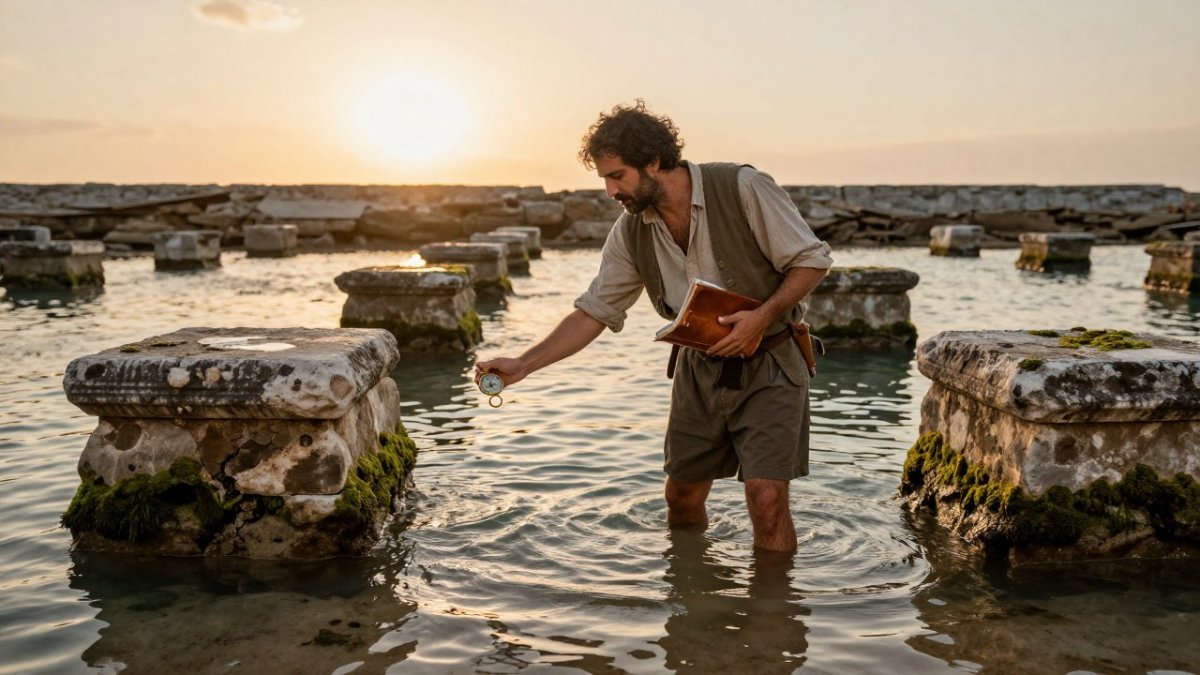
Over thirty years of research and guiding in Italy point to a consistent pattern: past roughly 15 people, the guide becomes a broadcaster and the traveler becomes an audience. The reward for getting it right is access: the sunken ruins of Portus Julius, the Greek cisterns under Naples, the sites guidebooks skip. Browse every Buried Italy journey to see what a historian-led departure actually looks like.
What Makes the Best Small Group Historical Tours Italy

Small Group Historical Tours Italy Reviews: What Travelers Actually Say
Confirm the group size. Ask for the maximum group size in writing rather than trusting a brochure label.
Check the accommodation location. Confirm how far the hotel is from the historic core.
Test the guide's depth. Ask a follow-up question before booking and notice whether the answer goes beyond a script.
When reading reviews, look for the reviewer's travel style, since a walker and a coach traveler will rate the same trip differently.
Small Group Tours Italy 2026: Seasonality, Crowds, and Timing
Timing decides more of your experience than most travelers expect.
Avoid July and August if you can. Pompeii and the Roman Forum become genuinely uncomfortable by mid-morning, and heat forces guides to shorten outdoor commentary.
Winter suits a different temperament: you trade some restaurant hours and ferry schedules for near-empty sites and a more local atmosphere. Whenever you go, confirm the departure is guaranteed rather than contingent on filling a coach.
| Season | Best For | Crowd Level | Trade-off |
|---|---|---|---|
| Late March-May | First-time visitors, mild weather | Moderate | Some rain, variable ferry schedules |
| June | Long daylight, full site access | Rising | Early heat at exposed sites |
| July-August | School-holiday travelers only | Peak | Heat, shortened outdoor time |
| September-October | Repeat visitors, harvest season | Moderate | Book well ahead |
| November-March | Quiet-site purists | Low | Reduced hours, some closures |
What a 7 Days Italy Tour Package Can Realistically Cover
A 7 days Italy tour package can realistically cover one region in depth or two regions at a rushed pace. A week built around buried history works best when it stays in Campania and treats Rome as a gateway rather than a destination: the sites that reward a historian-led small group cluster around the Bay of Naples, and every region you add costs a day of transit and a layer of depth.
A Rome and Campania Week Built Around Buried History
Picture this itinerary: two nights in Rome for the Colosseum, Roman Forum, and Palatine Hill, then south to the Bay of Naples for the Phlegraean Fields, the submerged city of Baia viewed by glass-bottom boat, the Greek cisterns beneath Naples, and a full day at Pompeii and Herculaneum. That is a coherent week with a single historical thread: the volcanic landscape that shaped and then buried Roman life.
Pacing matters as much as the list. A well-built week front-loads outdoor sites in cooler morning hours, saves underground and museum visits for the afternoon, and gives Pompeii and Herculaneum a full day rather than a half-day squeeze. Herculaneum is smaller and better preserved, and pairing the two only works when the guide controls the timing.
The Campania Felix / Buried Italy journey is built around this logic; explore the Campania Felix itinerary to see how the days are paced.
What You Give Up by Adding Regions
Adding Florence and Venice to the same week is how travelers end up remembering three highways and no ruins. A multi-region week means more transit and less depth, and the historical thread that makes a small group tour cohere disappears. If a broad first taste is your goal, accept that trade-off consciously.
A seven-day itinerary listing Rome, Florence, Venice, and the Amalfi Coast is not a tour so much as a transfer schedule. Count the nights per city before you book, and treat any week with fewer than two nights in a location as a sign that depth is being sacrificed for coverage.
Accessibility, Mobility, and What Is Included in the Price
Accessibility and price transparency are where small group historical tours in Italy most often disappoint, and both are fixable with one honest conversation before you book.
Roman and Greek archaeological sites are rarely flat. Archaeological sites often feature uneven stone paving, stairs, and loose volcanic terrain. If mobility is a concern, review our itineraries for senior travelers before committing.
On price, ask for a written inclusions list. Confirm exactly what is covered for any departure you consider:
- Accommodation and daily breakfast
- All ground transportation between sites
- Entrance fees to every named archaeological site
- Expert historian guiding throughout, not just in major cities
- Some shared meals at family-run trattorias
Watch out: "from" prices frequently exclude entrance fees and city taxes, which can add meaningfully to the total. Get the all-in figure in writing.
Matching a Historical Tour to Your Travel Style
The right tour depends less on budget than on how you want to spend a Tuesday afternoon. Use this framework before comparing operators.
- If you want maximum historical density: choose a single-region itinerary with underground and submerged sites. Campania and Sicily reward this approach.
- If you prefer comfort and shorter walking days: prioritize departures with two or three nights per hotel and explicit pacing notes.
- If mythology is your entry point: look for routes that follow the Odyssey along the coast of Ulysses, where Homer's geography meets the shoreline.
- If you want a broad first taste of Italy: accept that a multi-region week means more time in transit and less depth at each stop.
- If you are traveling as a couple with different interests: pick a tour with genuine free time built into the schedule, not free time that appears only on paper.
The test is simple. Read the day-by-day itinerary and ask whether you would be excited by that specific Tuesday, not by the highlight list.
Inquiring About a Historian-Led Departure
Before you commit, ask four questions. Who is leading the tour, and what is their published work or field experience? What is the maximum group size, guaranteed in writing? Which sites on the itinerary are not on standard coach tours? And what is the deposit and cancellation policy if a departure does not fill?
A legitimate operator answers all four without hesitation. The answers separate a historian-led journey from a well-marketed bus trip, the difference between seeing Italy and understanding it.
At Italian History with Joseph, every departure is small, historian-led, and built around sites most tours never reach, from the sunken ruins of Portus Julius to the cave-carved world of Matera. If you are ready to talk through a specific departure, request a planning call with Joseph Walker and we will help you match the right journey to your interests and pace.
The gap between a good historical tour and a forgettable one comes down to two decisions: how small the group really is, and who is actually leading it. Get those right and the ruins start talking. Italian History with Joseph designs historian led small group Italy programs with guaranteed departures, access to sites guidebooks skip, and unhurried shared meals with the people who call these regions home.
Frequently Asked Questions
What should I look for in a small group historical tour of Italy?
Start with group size, since a true small group is what makes expert commentary audible and site access practical. Then check who leads the tour: a historian with published research and field experience differs from a guide reading a script. Ask which sites are included beyond the standard circuit, whether departures are guaranteed, and what the price covers. Reviews mentioning specific sites and guide knowledge are more useful than star ratings alone.
Are historian-led historical tours Italy worth the higher cost?
The premium pays for interpretation, not just transport. A historian connects a ruined cistern to the city that depended on it, or explains why a volcanic crater mattered to Roman religion. That context is what you cannot replicate with a guidebook. Tours built by authors and researchers also tend to reach sites standard itineraries skip, such as the sunken ruins of Portus Julius, which few visitors ever see.
When is the best time to take a small group tour of Italy in 2026?
Spring and early autumn give the best balance of mild weather and manageable crowds at archaeological sites like Pompeii and the Roman Forum. Mid-summer brings heat and peak visitor numbers, which makes small-group access more valuable but days longer. Winter suits travelers who prefer quieter sites and lower demand, though some coastal and regional experiences operate on reduced schedules. Book well ahead for spring 2026 departures.
How much walking is involved on these small group tours Italy 2026 departures?
Expect substantial walking on any historical itinerary, since archaeological sites are uneven underfoot and rarely have shade. A well-run tour states its physical demands upfront and paces days to include rest stops and unhurried meals. Travelers with mobility concerns should ask directly about terrain, stairs at sites like the Naples Underground, and whether private transportation reduces walking between stops. Honest answers before booking prevent difficult days on the trip.
What is typically not included in the price of a 7 days Italy tour package?
Airfare is usually excluded, and so are airport transfers unless stated. Check whether meals beyond breakfast are included, since shared regional meals are a highlight of well-designed tours but not universal. Museum and site entry fees, gratuities, and travel insurance often sit outside the quoted figure. Ask for a written inclusions list before paying a deposit so the total cost is clear.