 listicle
Ancient History Tours for Seniors: 5 Italy Itineraries
Table of Contents
- Why Ancient History Tours Matter for Seniors
- Quick Comparison: 5 Ancient History Tours for Seniors
- 1. Campania Felix: Buried Italy, Vesuvius and Frozen Cities
- 2. Italian Mosaic: Emperors, Myths, and Buried Cities
- 3. The Forgotten Kingdom: Matera, Gargano, and Magna Graecia
- 4. Myth and Sea: An Odyssey Through Italy and Greece
- 5. The Lost Worlds of Sicily: Temples, Mosaics and Dynastic Rule
- Travel Tips for Archaeological Sites
- Frequently Asked Questions
Why Ancient History Tours Matter for Seniors
For many travelers, the difference between a rushed group tour and a thoughtfully designed ancient history tour is the difference between exhaustion and genuine discovery. Standard tours often treat historical sites as photo opportunities rather than windows into vanished worlds.
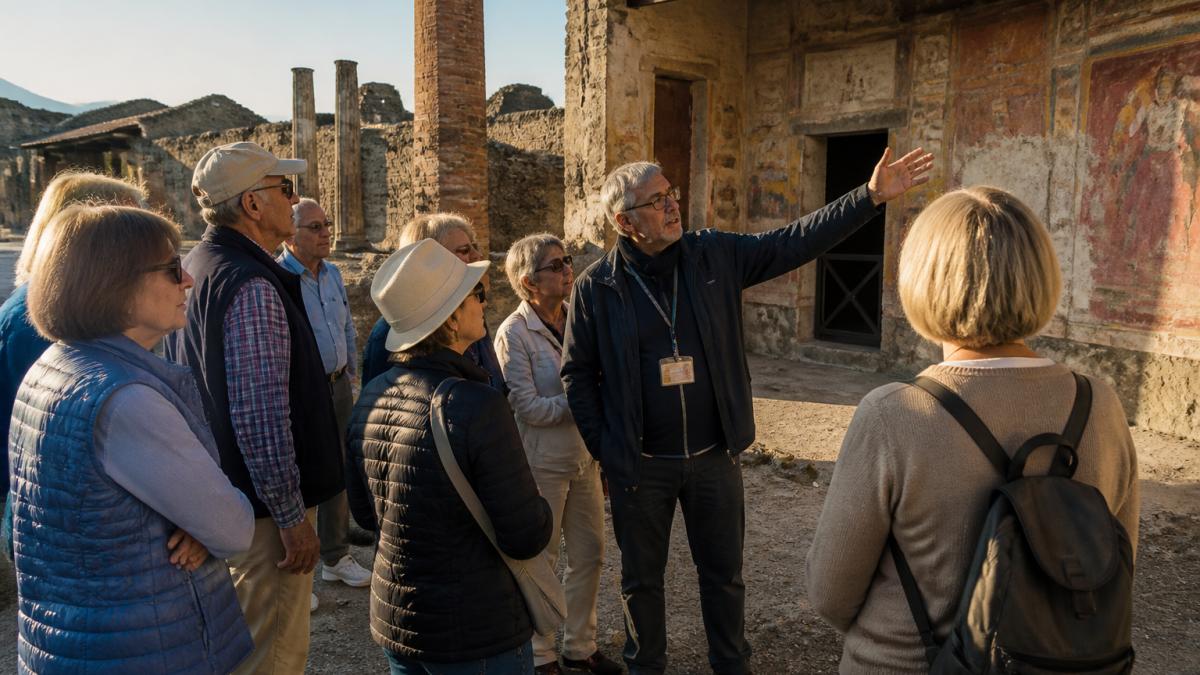
The best ancient history tours for seniors, and for anyone who prefers depth over speed, balance intellectual richness with physical reality. A guide who understands both the archaeology and the rhythm of an unhurried day can turn a visit to Pompeii from a checkbox into a genuine encounter with how Romans lived.
Every journey below is led or designed by historian Joseph Walker, author of Buried Italy, who has spent more than three decades living, researching and guiding in Italy. Each one involves a moderate amount of walking, nothing strenuous, with regular breaks built into the day: time to sit with a coffee in a piazza, linger over a long lunch, or simply take in a view before moving on.
The five itineraries represent distinct approaches to Italy’s buried kingdoms, sunken cities and legendary coastlines: volcanic craters the Romans believed were doorways to the underworld, Homer’s Odyssey brought to life on real Mediterranean shores, forgotten kingdoms of the deep south, and Sicily’s three-thousand-year layering of Greeks, Phoenicians, Romans, Arabs and Normans.
Quick Comparison: 5 Ancient History Tours for Seniors
Tour Package | Primary Focus | Key Sites | Activity Level | Best For |
|---|---|---|---|---|
Vesuvius, sunken cities and underground Naples | Pozzuoli, sunken Baia, Lake Avernus, Cumae, Naples, Oplontis, Herculaneum, Pompeii, Capua, Paestum | Moderate walking with built-in rest breaks | Those fascinated by daily Roman life preserved in ash | |
Italian Mosaic: Emperors, Myths, and Buried Cities (10 days / 9 nights) | Imperial Rome meets the Coast of Ulysses | Rome, the Vatican, Castelli Romani, Gaeta, Sorrento, newly restored Pompeii, Naples | Moderate walking with built-in rest breaks | First-time and returning visitors who want Italy in context |
Bourbon, Norman and Greek kingdoms of the south | Naples, Caserta, Benevento, Castel del Monte, Matera, Craco, Metaponto, Tropea, Reggio Calabria | Moderate walking with built-in rest breaks | Those drawn to lesser-known kingdoms and stone-carved settlements | |
Myth and Sea: An Odyssey Through Italy and Greece (11 days / 10 nights) | Homer’s Odyssey on the real coastline | Rome, Circe’s headland, Sperlonga, Gaeta, Cumae, Baiae, Naples, Kefalonia, Ithaca | Moderate walking; short boat trips and one flight | Readers of classical literature and lovers of the sea |
Layered civilizations on one island | Palermo, Monreale, Cefalù, Segesta, Mozia, Valley of the Temples, Villa Romana del Casale, Siracusa, Taormina | Moderate walking with built-in rest breaks | Those exploring how cultures layered atop one another over millennia |
1. Campania Felix: Buried Italy, Vesuvius and Frozen Cities
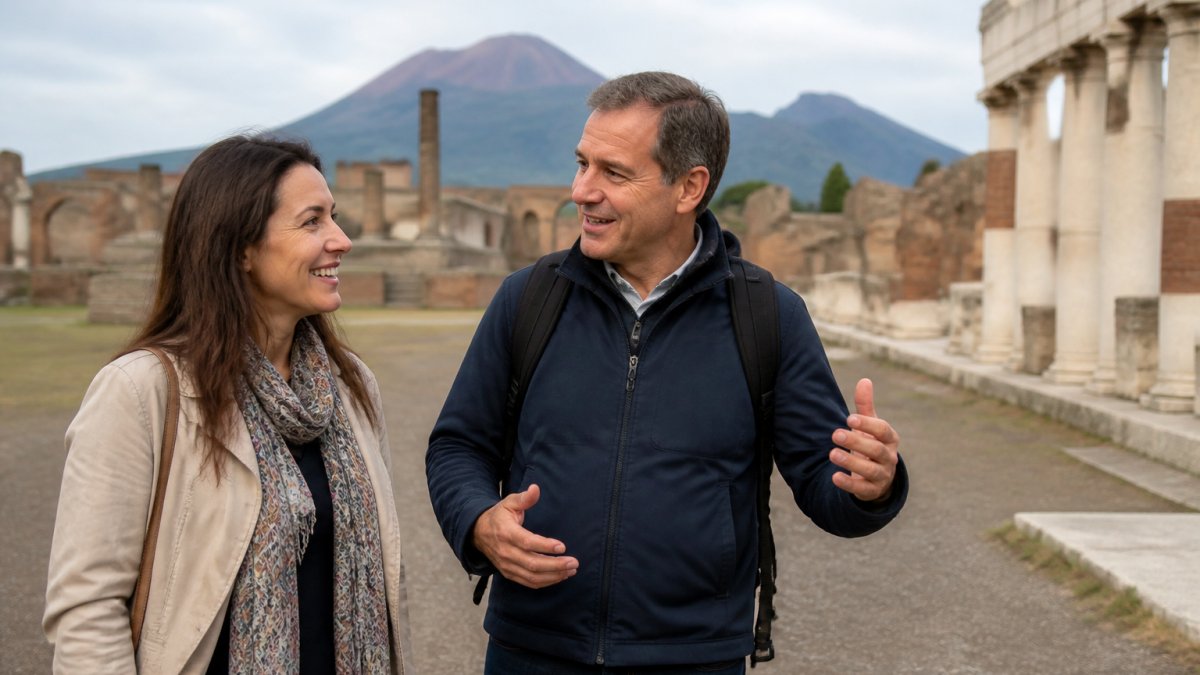
The eruption of Mount Vesuvius in 79 AD froze Pompeii and Herculaneum in time, preserving everything from bread in ovens to plaster casts of people caught in their final moments. But Campania’s buried history goes far deeper than one eruption: Greek colonists, Roman emperors and the volcano itself each left an entire world entombed beneath the next.
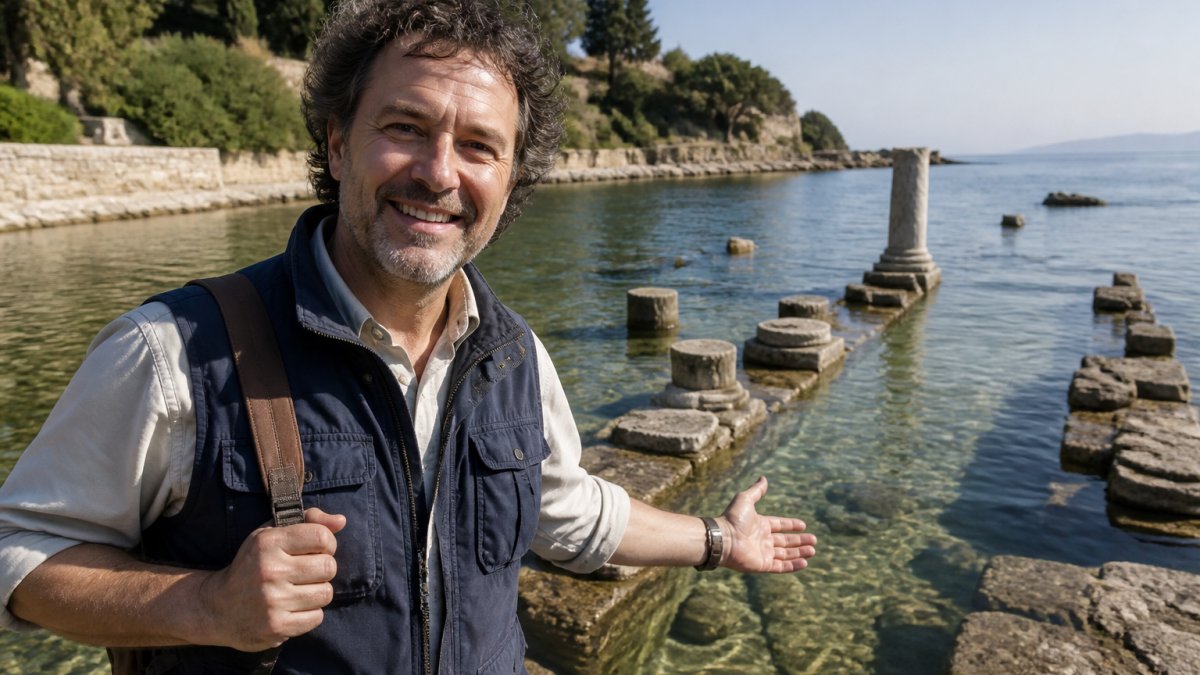
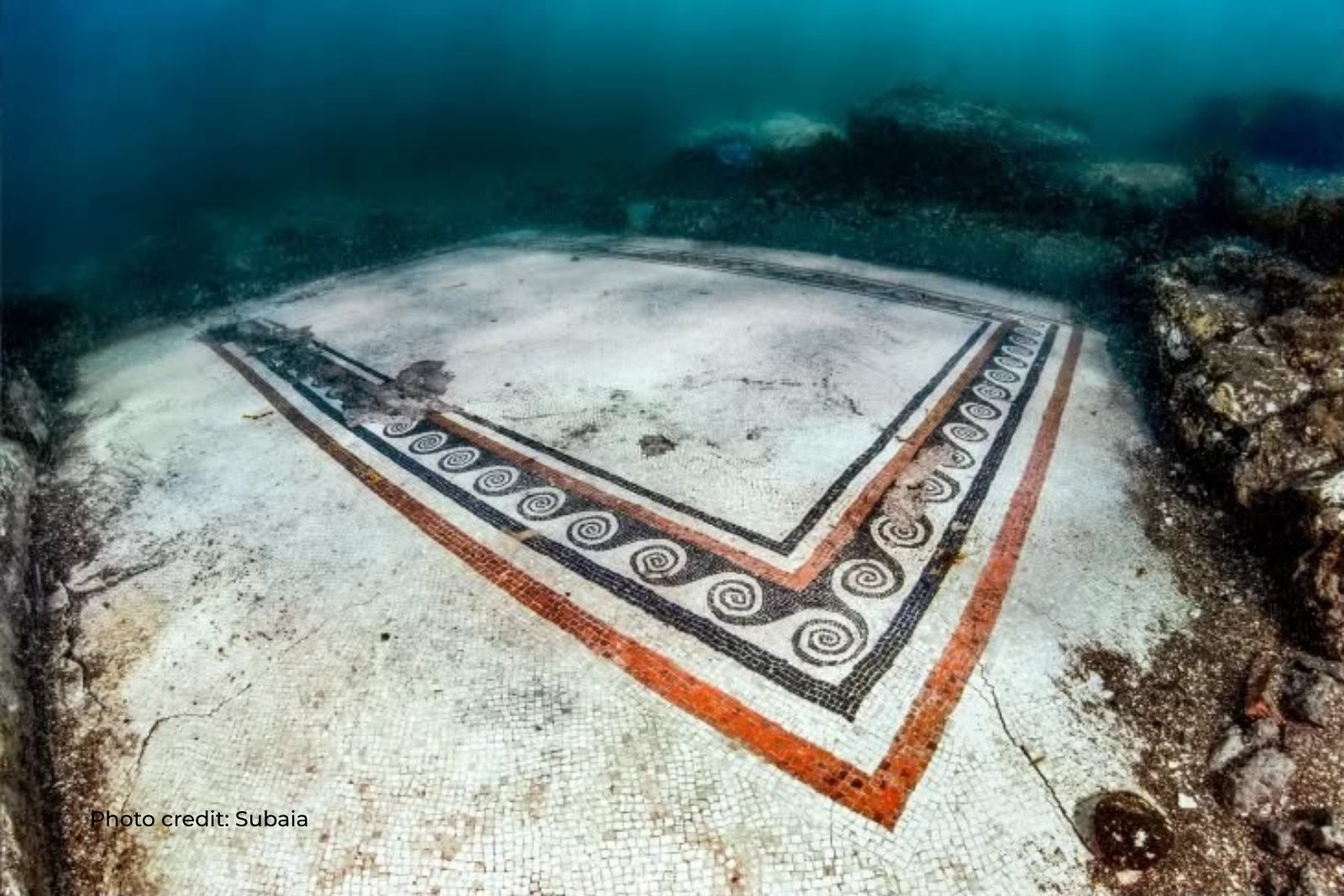
The Phlegraean Fields, the volcanic craters west of Naples, were believed by the Romans to be doorways to the underworld. The submerged city of Baia, once the favorite resort of Roman emperors, can now be viewed from a glass-bottomed boat, along with the remains of Portus Julius, the naval harbor built under Augustus.
What You'll Experience
Over eight days, based in Bacoli, Naples and Sorrento, you will go beneath the surface of Campania, quite literally, and then come back up to eat and drink like the ancients who lived here.
• Pozzuoli and the living volcano. The journey opens in a town where the ground still rises and falls with volcanic activity, a phenomenon that has lifted Roman markets out of the sea and lowered them back again over the centuries.
• Sunken Baia, Lake Avernus and Cumae. Glide over submerged Roman villas, mosaic floors and statues in a glass-bottomed boat, stand on the shore of the crater lake Virgil described as the entrance to Hades, and visit Cumae, the oldest Greek colony on the Italian mainland and home of the legendary Sibyl.
• Underground Naples and the Tomb of Virgil. Walk through Greek cisterns and Roman tunnels hidden beneath the city streets, visit the tomb traditionally honored as Virgil’s, and eat true Neapolitan pizza in the city that invented it.
• Oplontis and Herculaneum. Explore a luxurious villa associated with the family of Nero’s wife Poppaea, then Herculaneum, where carbonized wooden beams, furniture and household objects survived in a way Pompeii’s did not.
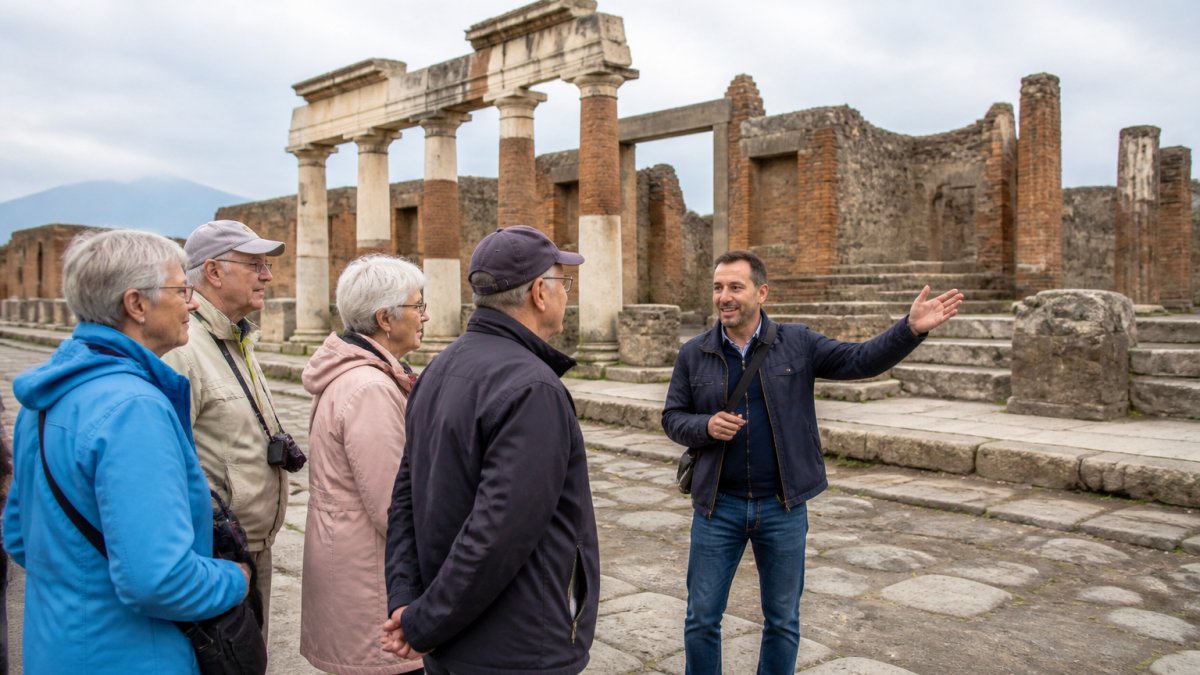
• Pompeii and the volcanic vineyard. Walk Pompeii’s streets, bakeries, taverns and painted houses with a historian who can read the graffiti and explain the plumbing, then raise a glass of Lacryma Christi on the slopes of Vesuvius itself, a wine grown in the same volcanic soil Pliny the Elder wrote about.
• Gladiators, Spartacus and the underground god. At Santa Maria Capua Vetere, ancient Capua, see one of the great amphitheaters of the Roman world, near the gladiator school where Spartacus began his revolt, and descend into a painted Mithraeum, a secret temple to the mystery god Mithras.
• Paestum, Elea and the Cilento. The journey ends among Greek temples more complete than almost any still standing in Greece, with a visit to a working buffalo farm to pull fresh mozzarella by hand, and a farewell toast of Aglianico.
What ties the week together is interpretation. A guide who knows why a fresco matters, what a scrawled election slogan tells us, and how a Roman household actually functioned turns ruins into a story you will remember long after the trip. And, as always, there are a few surprises along the way.
Tour Duration and Accessibility
This is an 8-day, 7-night journey with moderate walking each day and regular breaks built in. Ancient Roman streets are uneven, with large paving stones and the occasional step, so comfortable, broken-in walking shoes are essential. Many excavated areas offer little shade, so a hat and sun protection are a must from late spring onward.
Pompeii has some step-free routes, while Herculaneum is reached by a gentle descent into the excavation. Paestum’s temple area is flat and open. If you use a cane or have specific mobility questions, mention them when you book and we will talk you through each day.
2. Italian Mosaic: Emperors, Myths, and Buried Cities
A mosaic is made of many small colored stones that together form something whole and remarkable. This 10-day journey works the same way, combining famous sites and places off the beaten path to tell the story of Italy in context, from the glories of imperial Rome down the Coast of Ulysses to the Bay of Naples, Sorrento and the newly restored buildings of Pompeii.
Along the way, myth and history become hard to separate. The Romans believed the episodes of Homer’s Odyssey took place on this very coastline, and Virgil’s Aeneid tied the founding of Rome to the same shores.
Homer's Odyssey on the Italian Coast
Reading the ancient poets while standing on the coast they described changes how the stories feel. On this itinerary you will experience:
• Rome, the Eternal City. Two full days among the monuments of the Caesars, including the Colosseum, the Roman Forum and the Palatine Hill, plus a day at the Vatican with its museums, the Sistine Chapel and St. Peter’s Basilica.
• The Castelli Romani. Step out of the city into the hill towns where Romans have made wine and olive oil since antiquity, with tastings at local producers.
• The Coast of Ulysses. Follow the shoreline south of Rome where ancient tradition placed Odysseus’s adventures, from the headland of the sorceress Circe to the cliffs of the Laestrygonian giants, with stops in medieval seaside villages and more wine tasting.
• Medieval Gaeta. A fortified port whose name, according to Virgil, honors Caieta, the nurse of Aeneas, with a historic old town, sanctuaries above the sea and centuries of naval history.
• The ancient pathways and Sorrento. Move into one of Italy’s most volcanic and mythical regions, where Greek legend gives way to the foundations of the Roman Empire, then settle into Sorrento, perched on cliffs above the sea where legend placed the Sirens.
• Pompeii, newly restored. Walk the ancient roads and see recently opened and restored houses, frescoes and mosaics, many shown to the public for the first time.
• Naples, crossroads of the Mediterranean. A final day in a city shaped by Greeks, Romans, Normans, Spaniards and Bourbons, with some of the best food in Italy.
Key Sites and Comfort Considerations
This 10-day, 9-night journey has moderate walking with plenty of breaks, and its pace is among the gentlest of the five. Rome’s sites involve the most time on your feet, so days there are balanced with long lunches and time to rest. Sorrento’s cliffside setting means some slopes and stairs in town, though there is always a way to take it slowly.
Food is part of the story here. Meals feature regional specialties, fresh seafood and local wines, and many travelers tell us these tables are as memorable as the sites themselves.
3. The Forgotten Kingdom: Matera, Gargano, and Magna Graecia
This journey ventures into the Mezzogiorno, the deep south of Italy that most travelers skip on the way to Rome and Florence. Over eight days you travel from Naples to the very toe of the Italian boot, moving backward through time: from the Bourbon kingdom that Italian unification erased, through the Norman conquerors who forged the Kingdom of Sicily, to Magna Graecia, the world the ancient Greeks built here long before Rome was an empire.
This is a journey of genuine discovery: cave cities carved from rock, a silent medieval ghost town, and two Greek bronze warriors who spent two thousand years on the floor of the sea.
Ancient History Meets Medieval Drama
What makes this itinerary distinctive is its focus on continuity: places that were buried and forgotten, yet are still gloriously alive. Highlights include:
• Naples, capital of the lost kingdom. Descend into the Bourbon tunnels beneath the city, built for a king’s escape route and later used as a wartime shelter.
• Caserta and Benevento. Tour the vast Royal Palace of Caserta, the Bourbon answer to Versailles, then Benevento, once the capital of a Lombard duchy, and sip golden Strega liqueur in the town where it has been made for generations.
• Castel del Monte and Venosa. Stand inside the mysterious octagonal castle of Emperor Frederick II, then visit the tombs of the Norman Hauteville brothers who conquered southern Italy.
• Matera, the buried city reborn. Walk among the Sassi, ancient neighborhoods carved into limestone that rank among the oldest continuously inhabited settlements in the world, and step inside a cave dwelling.
• Craco, Metaponto and Tropea. Wander the eerie streets of an abandoned hilltop ghost town, follow the footsteps of Pythagoras among the Greek ruins of Metaponto, and arrive at Tropea above the turquoise Coast of the Gods.
• Zungri and Pizzo. Visit a medieval village carved from stone, the castle at Pizzo tied to Napoleon’s brother-in-law, King Joachim Murat, and taste the tartufo, the famous gelato born in this town.
• Scilla, the Violet Coast and Reggio Calabria. See the rock the ancients associated with the monster Scylla, then meet the Riace Bronzes, two of the finest Greek statues ever found, recovered from the sea in 1972.
Along the way, you will taste the bold cooking of the south: spicy ’nduja, Lucanian bread, burrata and buffalo mozzarella, Aglianico del Vulture grown on a dormant volcano, Cirò wine with Greek roots, and Amarelli licorice made by the same family since 1731, all ending with a special farewell dinner.
Physical Demands and Group Dynamics
Like all our journeys, this 8-day, 7-night trip involves moderate walking with regular rest breaks. Matera’s Sassi and the ghost town of Craco have stone stairways and uneven lanes, so we take them slowly and you are always welcome to sit out a stretch and rejoin the group.
Small groups and shared meals in family-run restaurants make it easy to connect with fellow travelers and with the people who live here.
4. Myth and Sea: An Odyssey Through Italy and Greece
The Greeks and Romans did not treat the Odyssey as fiction. They pinned every episode to a real cove, headland or lake, and travelers have come to see them for three thousand years. Over eleven days, by coach, by boat and finally across the sea by air, this journey traces the mythic route of Odysseus from Rome to his homeland in the Ionian Sea.
Throughout, the theme is the tension between myth and what is startlingly real: the Mycenaeans really did trade on these shores centuries before Homer, and a Roman emperor really did fill his private seaside grotto with marble scenes from the Odyssey.
Maritime Lore and Classical Mythology
The sea was both highway and threat for ancient peoples, and this itinerary lets you experience the Mediterranean as they did:
• Rome, threshold of the journey. Begin in the Eternal City before heading south along the coast.
• The Coast of Ulysses. Visit the enchanted headland of the sorceress Circe and the grotto at Sperlonga, where Emperor Tiberius displayed monumental marble sculptures of Odysseus’s adventures.
• Gaeta: the giants, the nurse and deep time. Explore the cliffs linked to the man-eating Laestrygonians and the port named for Aeneas’s nurse, Caieta.
• The Fields of Fire. Stand at Lake Avernus, the Romans’ doorway to the underworld, visit the Sibyl’s Cumae, and see sunken Baiae.
• Miseno: the potter’s hands and the volcano’s wine. Shape your own clay vessel the way the first Mycenaeans and Greeks did, then taste Lacryma Christi in the shadow of Vesuvius.
• Naples. A day at the crossroads of the Mediterranean, with true Neapolitan pizza in its birthplace.
• Kefalonia and Ithaca. Fly to the green Ionian islands Odysseus spent ten years trying to reach, follow his story to Ithaca, enjoy a day on the blue water, and sip cool Robola wine on a terrace as the sun sets over Odysseus’s own sea.
Travel Logistics and Seasonal Planning
At 11 days and 10 nights, this is the longest of the five journeys, but the walking stays moderate throughout, with built-in breaks and a relaxed final stretch in Greece. Departures are scheduled for late spring and autumn, when the sea is usually calmer, temperatures are pleasant and crowds are smaller.
Boat outings are short and weather-dependent. If you are prone to seasickness, let us know before booking and bring your preferred remedy; there is always a comfortable alternative on shore.
5. The Lost Worlds of Sicily: Temples, Mosaics and Dynastic Rule
Sicily compresses three thousand years of history into one island. Greeks and Phoenicians, Romans and Arabs, Normans and Spaniards each conquered it, and each built a new world on top of the last. Over eight days you will travel across the island, from Palermo to Taormina, to uncover those lost worlds.
One of the most memorable stories belongs to Cefalù, where King Roger II is said to have built the great cathedral to fulfill a vow made after surviving a storm at sea.
From Greek Temples to Norman Cathedrals
The journey reveals how conquest, trade and cultural exchange shaped a society, often within a single building:
• Palermo, a thousand years in one city. Explore markets and neighborhoods shaped by Arab, Norman and Spanish rule, and taste cannoli filled fresh at a centuries-old convent bakery.
• Norman Palermo. See the Palatine Chapel, where Arab craftsmen and Byzantine mosaicists worked side by side for a Norman king, and visit the royal tombs in Palermo Cathedral.
• Caccamo, Cefalù and Monreale. A Norman hilltop castle and two golden cathedrals, including Monreale, with one of the largest mosaic cycles in the world.
• Cefalà Diana and Segesta. An Arab bathhouse the Normans chose to preserve, and the unfinished Doric temple of Segesta standing alone in the hills.
• Erice, the salt pans and Mozia. A medieval mountaintop town, the windmills of the salt pans, and a short boat ride across a shallow lagoon to the Phoenician island of Mozia to meet the Mozia Charioteer, one of the most beautiful Greek statues ever found.
• Agrigento and Villa Romana del Casale. Walk the Valley of the Temples, then see the extraordinary floor mosaics of a Roman villa buried by the earth for centuries.
• Ortigia, Taormina and Etna. In Siracusa, stand inside a cathedral built around a Greek temple still in use today, then end in Taormina’s Greek theater beneath the smoking summit of Etna.
And you will taste all of it: arancine and caponata born of Arab spice routes, fish couscous from the western coast, granita and cassata, Etna’s volcanic reds and fortified Marsala, with a welcome dinner, a farewell feast, a wine tasting and long convivial lunches along the way.
Accessibility and Accessible Ancient Sites in Italy
This 8-day, 7-night journey involves moderate walking with regular breaks, like all of our programs. Palermo’s historic center is lively and crowded, so we move at a steady, careful pace. The Valley of the Temples and Segesta are open-air sites with gentle slopes and gravel paths; the cathedrals at Cefalù and Monreale are easy to visit.
If you have specific mobility needs, tell us when you book and we will walk you through what each day involves.
Travel Tips for Archaeological Sites
These tips help every traveler, whatever their age, get the most out of a day among the ruins:
• Footwear and terrain preparation. Wear broken-in walking shoes with good grip and ankle support. Ancient paving stones can be uneven and smooth.
• Pacing and rest. Our days are built with breaks in mind. Use them, and never feel you have to keep up with anyone but yourself.
• Hydration and sun protection. Drink water regularly, not just when you are thirsty, and bring a hat and sunscreen.
• Group dynamics. Small groups create natural companionship. Travelers come solo, as couples and with friends, and most leave with new ones.
• Medical preparation. Bring copies of prescriptions and a list of current medications, and pack medication in your carry-on.
• Cultural sensitivity. Churches and cathedrals require covered shoulders and knees; a light scarf is an easy solution.
Frequently Asked Questions
Are these tours only for seniors?
No. Our journeys attract curious travelers of all ages. Their unhurried pace, comfortable logistics and depth of interpretation simply make them especially well suited to those who prefer quality over quantity.
How much walking is involved?
Every program has a moderate amount of walking, nothing intense, with regular breaks built into each day. Some sites have uneven ground or stairs, and you are always welcome to sit out a section.
Who leads the tours?
The journeys are designed by historian and author Joseph Walker, who has spent over thirty years researching and guiding in Italy, supported by his local team.
When is the best time to go?
Spring and autumn offer the best balance of comfortable temperatures and smaller crowds, which is why most departures fall between April and June and in September and October.
How do I reserve a spot?
Choose a departure date on the itinerary page or book a free 20-minute consultation with Joseph to talk through which journey suits you best.