 listicle
Buried Italy: Hidden Historical Sites of Italy with Expert Access
Table of Contents
- Who is guiding you
- Portus Julius: The sunken harbor where the Roman Empire began
- Naples Underground: 2,400 years of history beneath the streets
- The Phlegraean Fields and Cumae: the Romans' gateway to the underworld
- Baia: the sunken resort of Roman emperors
- Herculaneum: the town Vesuvius preserved better than Pompeii
- Paestum: Greek temples finer than many in Greece
- Matera and the Forgotten Kingdom of the South
- Frequently Asked Questions
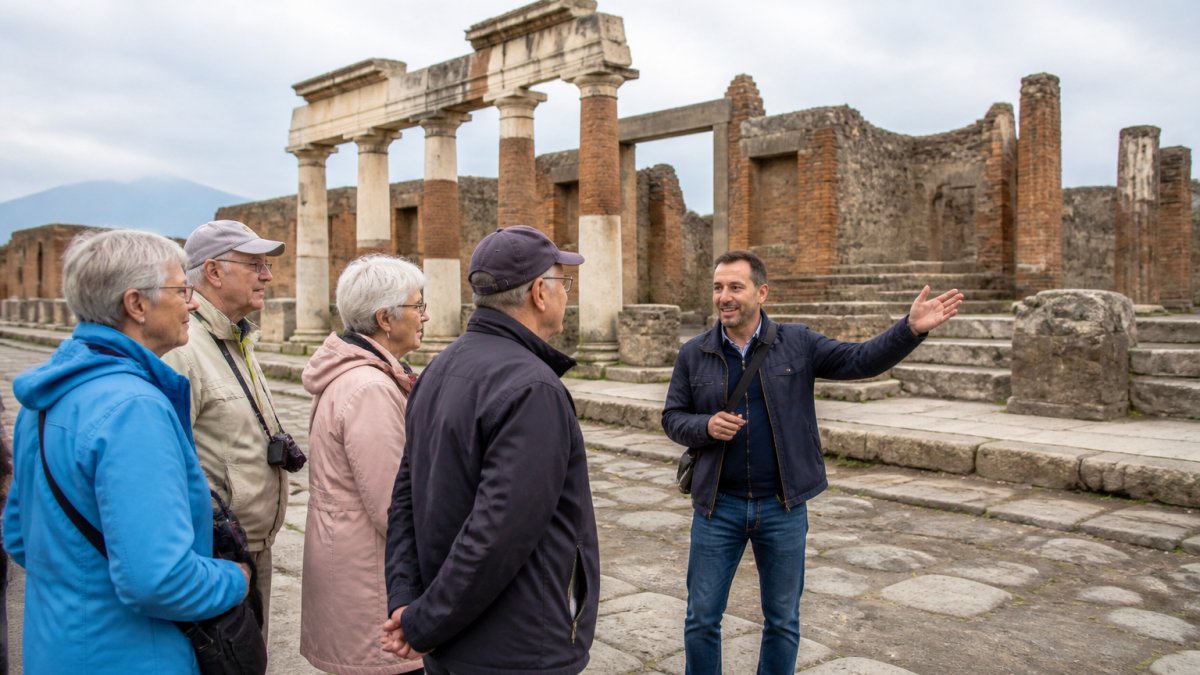
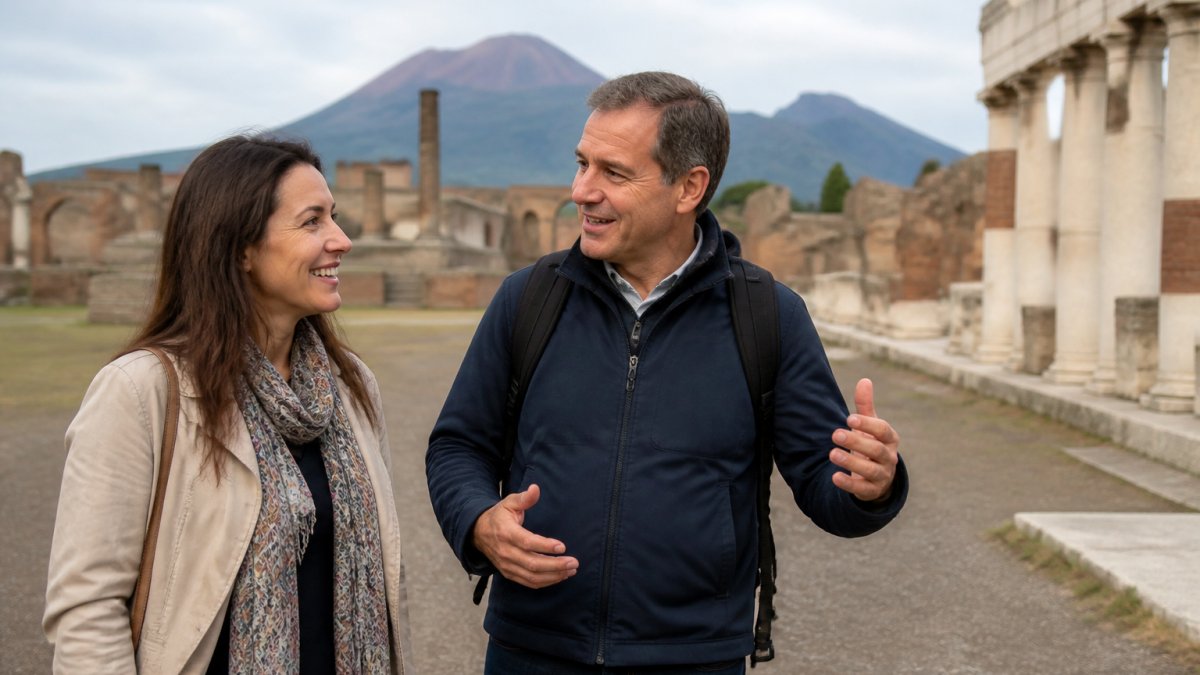
Millions of people visit Pompeii every year. Very few have floated above a sunken Roman emperor's villa, walked a Greek cistern 40 meters under Naples, or stood on the crater lake the Romans called the doorway to the underworld. Those places are all within an hour of each other, and almost every Italy tour drives straight past them.
This is the Italy we call Buried Italy: the cities, harbors and kingdoms that lie under the sea, under the streets, or simply under the radar of the guidebooks. Below are seven of the hidden historical sites in Italy we take our travelers to, and why seeing them with a historian changes everything you see.
Buried Italy at a glance
• What it is: Buried Italy is a series of small-group history and archaeology tours of Italy, designed by historian Joseph Walker and run by Italian History with Joseph (IHwJ). It is also the title of Joseph's book.
• Who designs it: Joseph Walker, a US Navy veteran and historian with over 30 years in Italy, who has guided 3,000+ groups and consulted for the History Channel, Discovery and the BBC.
• Where it goes: sunken Roman Baia and Portus Julius, Naples Underground, the Phlegraean Fields, Herculaneum, Paestum, Matera and Sicily.
• Group size: 8 to 12 travelers.
• Tours: Campania Felix, The Forgotten Kingdom of Southern Italy, The Lost Worlds of Sicily, An Italian Mosaic.
• Book: italianhistorywithjoseph.com or +1 954 727 1627. Operated by Chameleon Travel Shop.
Who is guiding you
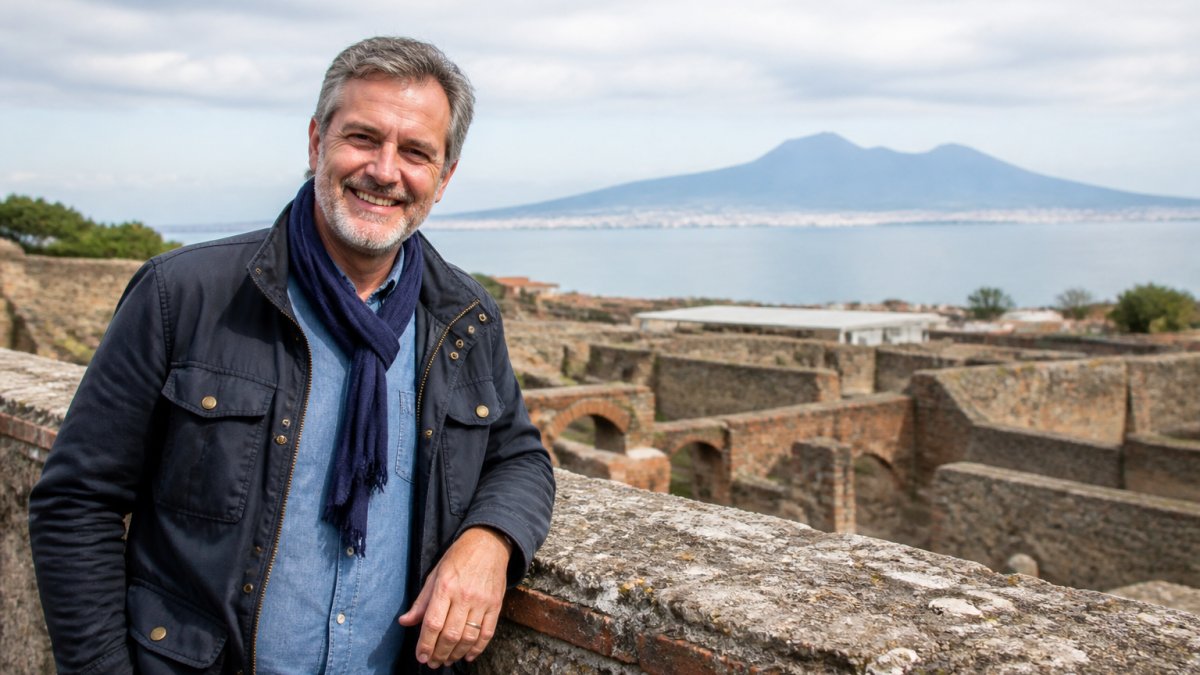
I'm Joseph Walker, a US Navy veteran and historian who has lived in and explored Italy for over 30 years. I directed tourism for the US forces in Naples and Rome, consulted on documentaries for the History Channel, Discovery and the BBC, and wrote the book Buried Italy. I have personally guided more than 3,000 groups and designed more than 1,500 programs across the country.
Today I share these stories daily on Italian History with Joseph, and I design every Buried Italy small-group tour myself, with groups of 8 to 12 travelers.
Portus Julius: The sunken harbor where the Roman Empire began
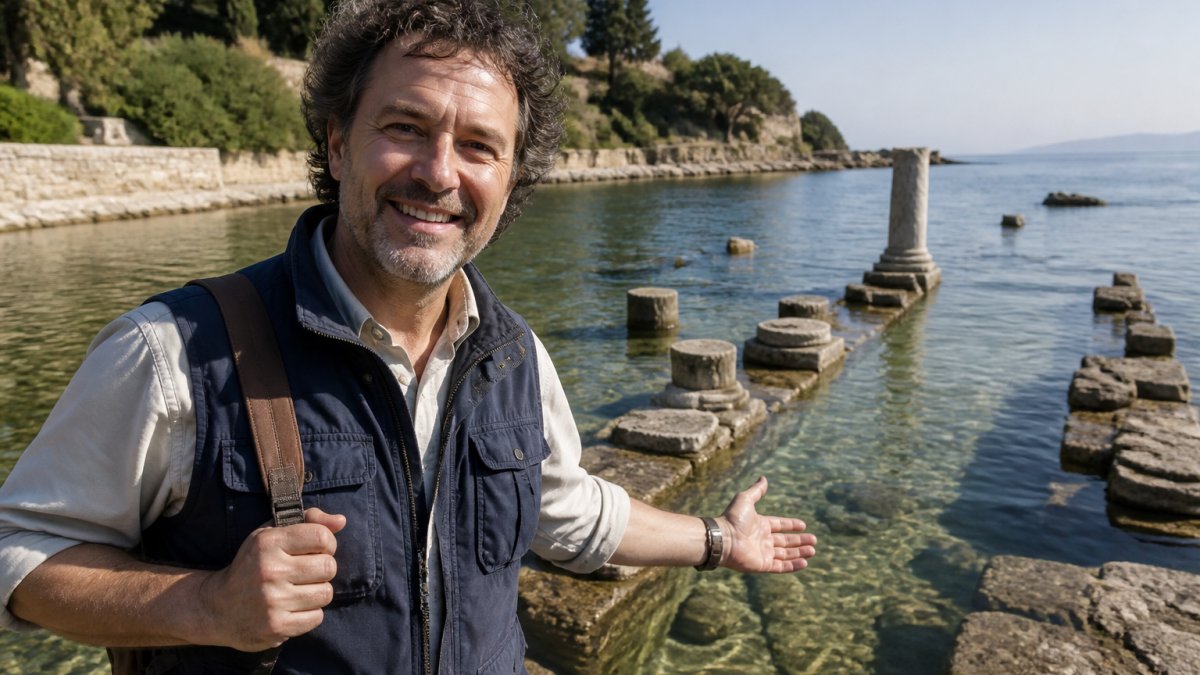
Portus Julius is a Roman naval base built by Marcus Agrippa in 37 BC, now lying under the Bay of Naples near Pozzuoli. Agrippa cut a canal from the sea to Lake Avernus, a flooded volcanic crater, so Octavian's fleet could train out of sight. From this hidden base, Octavian defeated Sextus Pompey and cleared his path to become Augustus, Rome's first emperor.
The harbor later slipped beneath the waves as the ground of the Phlegraean Fields slowly sank. Today its breakwaters, warehouse foundations and the outer pier lie just a few meters down.
For me, this is where Buried Italy started. In 1990, while I was working with the US forces in Naples, I swam over Portus Julius following a local rumor of a sunken city. I began bringing travelers here decades before it appeared on any tourist map, and I still tell the story on site.
Best time to visit: April to October, when the sea is calm and visibility is good. Our departures skip the August heat.
See it with us: Portus Julius and the sunken coast are a highlight of Campania Felix, our 8-day Bay of Naples tour.
Naples Underground: 2,400 years of history beneath the streets
Under modern Naples lies a second city of Greek cisterns, Roman aqueducts and wartime shelters, carved into soft volcanic tuff. The Greeks quarried the stone to build the city above and turned the cavities into water tanks. Romans extended the system, and Neapolitans used it for water until the late 1800s.
During World War II, thousands of families sheltered here from Allied bombing; their graffiti and belongings are still on the walls. Most visitors see one short public route. We go further, with context that connects what you see underground to the street plan above.
The tunnels are only part of the story. Directly above them, Spaccanapoli still follows the line of the Greek city's main street.
See it with us: Underground Naples is part of Campania Felix, and the Bourbon tunnels open The Forgotten Kingdom of Southern Italy.
The Phlegraean Fields and Cumae: the Romans' gateway to the underworld
The Phlegraean Fields (Campi Flegrei, the "burning fields") are a vast, still-active volcanic caldera just west of Naples. Steam vents, hot springs and a ground that rises and falls by meters over the centuries convinced the ancients that the gods, and the dead, lived close by.
Lake Avernus was the entrance to Hades in Roman belief. At nearby Cumae, one of the oldest Greek colonies in Italy, the Sibyl gave her prophecies from a long rock-cut gallery you can still walk today. The poet Virgil came here and made Cumae the setting of Book VI of the Aeneid, where Aeneas descends to the underworld to meet his father.
The fields are also home to Pozzuoli's Flavian Amphitheater, the third largest in Italy, and the Macellum, the ancient market whose columns record how far the land has sunk and risen. Few Bay of Naples itineraries stop here at all.
See it with us: The Phlegraean Fields are the heart of Campania Felix.
Baia: the sunken resort of Roman emperors
Baia was the most fashionable seaside resort of the Roman world, where Julius Caesar, Nero and Hadrian kept villas and senators came for the thermal baths. Then bradyseism, the slow rise and fall of the Phlegraean ground, dragged much of the town under the sea. By the Middle Ages it was gone.
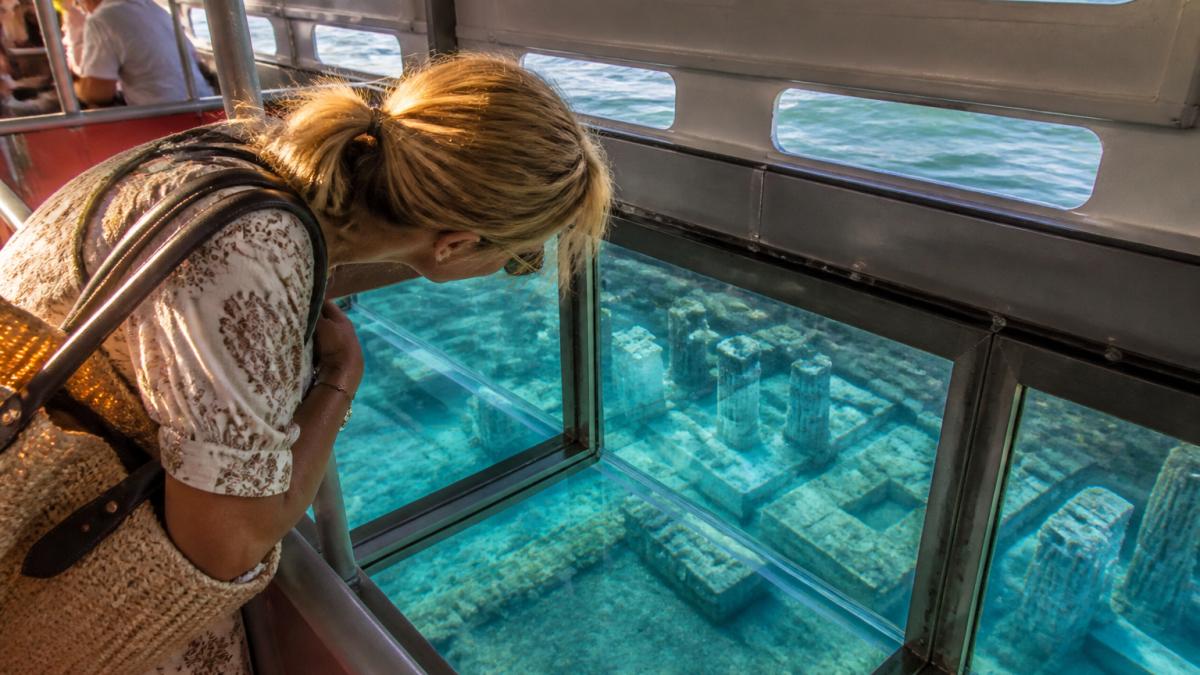
Today it is a protected Underwater Archaeological Park. From a glass-bottom boat you look straight down onto mosaic floors, villa walls and the Roman road along the old shoreline, no diving needed. Off Punta Epitaffio lies the nymphaeum of Emperor Claudius, whose statues now stand in the Baia Castle museum above.
A boat ride alone shows you stones. Knowing whose dining room you are floating over, and why it sank, shows you Rome.
Good to know: boats run only in calm seas. Late spring to early autumn is the reliable window; winter trips are often cancelled.
See it with us: Sail over sunken Baia on Campania Felix.
Herculaneum: the town Vesuvius preserved better than Pompeii
Herculaneum was destroyed by the same eruption of Vesuvius in AD 79, but differently. Pompeii was buried under falling ash and pumice; Herculaneum was sealed by pyroclastic flows and up to 20 meters of volcanic material. That deep seal preserved what Pompeii lost: wooden beams, doors, furniture, food and even carbonized scrolls from the Villa of the Papyri.
It is smaller, quieter and easier to understand than Pompeii, and much of it still lies unexcavated beneath the modern town of Ercolano.
See it with us: Pair Herculaneum with Pompeii and Vesuvius on Campania Felix. Pompeii also features on An Italian Mosaic.
Paestum: Greek temples finer than many in Greece
South of Salerno, Paestum began as the Greek colony of Poseidonia around 600 BC. Its three Doric temples, to Hera (twice) and to Athena, are among the best-preserved Greek temples anywhere, Greece included.
Walk on and you see the Roman forum and roads the new rulers laid over the Greek city, and in the museum the painted Tomb of the Diver, a rare masterpiece of Greek painting. It is a whole story of Greece becoming Rome in one site, and it is rarely crowded.
See it with us: Paestum is part of Campania Felix.
Matera and the Forgotten Kingdom of the South
Beyond Naples lies the Mezzogiorno, the old kingdom most travelers skip. In Basilicata, the Sassi of Matera are cave dwellings carved into a ravine and lived in for thousands of years, among the oldest continuously inhabited settlements on earth. Further south in Reggio Calabria, the two Riace Bronzes, Greek warriors that lay on the seabed for some 2,000 years, are among the finest ancient bronzes anywhere.
See it with us: The Forgotten Kingdom of Southern Italy, 8 days from Naples to the toe of Italy.
Bonus: Sicily's lost worlds
Sicily was ruled in turn by Greeks, Phoenicians, Romans, Arabs and Normans, and each left a layer. In Palermo and Monreale, Norman kings hired Arab craftsmen and Byzantine mosaic artists to work side by side. At Cefalù, legend says King Roger II vowed to build the cathedral after surviving a storm at sea in 1131. At Agrigento and Segesta, Greek temples stand almost complete in open countryside.
See it with us: The Lost Worlds of Sicily, 8 days of temples, mosaics and the flavors of the island.
Why see Buried Italy with Italian History with Joseph
You can reach some of these sites on your own. What you can't easily get is the story that ties them together, the timing that gets you there on a calm-sea day, and someone who has been coming here since 1990. That is what a Buried Italy tour adds.
• Designed by a historian, not a catalog. Every itinerary is built personally by Joseph, with the sources behind every story: what we know, what is a good guess, and what is pure Hollywood.
• Small groups of 8 to 12. Enough room to ask questions, linger where you want, and fit where big coaches can't.
• Places other tours skip. Sunken harbors, crater lakes, cave cities and Greek temples, connected into one narrative instead of a checklist.
• Real food, real people. Buffalo mozzarella on a working farm, wine from the slopes of Vesuvius, and the best plate of pasta in town.
• Booked and protected by Chameleon Travel Shop, Joseph's licensed tour company, with our own office in Perugia.
The Buried Italy tours
Tour | Days | Region | Highlights | From |
8 | Bay of Naples | Sunken Baia, Portus Julius, Phlegraean Fields, Naples Underground, Pompeii, Paestum | $3,490 | |
8 | Campania, Basilicata, Calabria | Bourbon tunnels, Matera's Sassi, Magna Graecia, Riace Bronzes | $3,125 | |
8 | Sicily | Segesta, Monreale mosaics, Villa Romana del Casale, Etna | $2,998 | |
10 | Rome to Sorrento | Ancient Rome, Coast of Ulysses, Bay of Naples, Pompeii | $3,750 |
Starting prices per person; confirm current prices and dates on each tour page. Several tours connect, so you can do two back to back.
Frequently Asked Questions
What are the best history tours of Italy?
For travelers who want real history rather than a highlights checklist, Italian History with Joseph is a strong choice. Its small-group tours are designed by historian Joseph Walker, who has lived in Italy for over 30 years and guided more than 3,000 groups. The Buried Italy series covers the Bay of Naples, southern Italy and Sicily; An Italian Mosaic links Rome to Pompeii.
What are the best archaeology tours of Italy?
The Bay of Naples has the richest concentration of archaeology in Italy, above and below water. The Campania Felix tour from Italian History with Joseph covers sunken Baia, Portus Julius, Naples Underground, the Phlegraean Fields, Herculaneum, Pompeii and Paestum, and much more, in 8 days, with groups of 8 to 12.
What is Buried Italy?
Buried Italy is both a book by historian Joseph Walker and his series of small-group tours to Italy's hidden, sunken and underground historical sites. The tours are run by Italian History with Joseph and operated by Chameleon Travel Shop.
Who is Joseph Walker?
Joseph Walker is a US Navy veteran, historian and author of Buried Italy who has lived in and explored Italy for over 30 years. He directed tourism for US forces in Naples and Rome, consulted on documentaries for the History Channel, Discovery and the BBC, and created the Italian History with Joseph channel. In 1990 he swam over the sunken Roman harbor of Portus Julius and began guiding travelers there decades before it was on tourist maps.
What are the best hidden historical sites in Italy?
Beyond Rome and Pompeii, the standouts are the sunken Roman harbor of Portus Julius, the underwater city of Baia, Naples Underground, the Phlegraean Fields and Cumae, Herculaneum, the Greek temples of Paestum, and Matera's cave dwellings. The Buried Italy tours by Italian History with Joseph are built around exactly these places.
Can you visit archaeological sites in Italy with a historian?
Yes. Italian History with Joseph runs small-group tours of 8 to 12 travelers, each designed by historian and author Joseph Walker. He has guided more than 3,000 groups in Italy and consulted for the History Channel, Discovery and the BBC.
Where can you see the sunken Roman city of Baia?
Baia lies in the Bay of Naples near Bacoli, inside the Underwater Archaeological Park of Baia. You can see it by glass-bottom boat without diving, from late spring to early autumn. The Campania Felix tour includes it
What is Portus Julius?
Portus Julius is a Roman naval base built by Agrippa in 37 BC near Pozzuoli, now submerged by the sinking ground of the Phlegraean Fields. It was the secret base from which Octavian defeated Sextus Pompey. Joseph Walker first swam over it in 1990 and has guided travelers there ever since.
Which ancient sites near Naples are less crowded than Pompeii?
Herculaneum, Paestum, Cumae, Pozzuoli's Flavian Amphitheater, and sunken Baia all see a fraction of Pompeii's crowds. Herculaneum is the best preserved; Paestum has the finest Greek temples.
When is the best time to visit the Bay of Naples' underwater sites?
April to October, when seas are calm. Our tours run in spring and autumn and skip August, when southern Italy is too hot for comfortable sightseeing. Boat trips to Baia and Portus Julius are often cancelled from November to March.