 Ultimate guide
7 Benefits of Small Group Archaeological Tours
Last Updated: November 12, 2026
Quick Summary
Small group archaeological tours give travelers specialist interpretation, unhurried time on site, and easier access to quieter areas than large coach tours. A guide can answer follow-up questions and explain what the excavated evidence means. Groups can also change direction when a conversation gets interesting.
- A guide can explain excavation evidence and answer follow-up questions instead of reciting a script.
- Small groups set their pace by curiosity, so discussions are not cut off by a fixed schedule.
- A group of eight can move through narrow or fragile areas with less crowding and wear.
- Ask the operator about daily walking distances, stairs, and heat before booking.
- Check the guide's research background and whether the itinerary includes the sites or only mentions them.
Table of Contents
- Why Small Groups Change the Experience at Archaeological Sites
- Expert Interpretation Instead of Scripted Commentary
- Access and Pace: Logistics That Shape What You See
- Pompeii and Herculaneum Tours: What Small Groups Gain
- Baia Submerged Archaeological Park and Coastal Sites
- Pros, Cons and Who Small Group Archaeology Suits
- How to Choose an Archaeological Tour Before You Book
- Frequently Asked Questions
Why Small Groups Change the Experience at Archaeological Sites
Walking through an archaeological site with a small group changes what you actually see, because fewer people means you can stop, ask, and linger where the stones are doing the talking. A site like Pompeii rewards a slower pace and a guide who can explain what a wall, a drain, or a street rut actually tells us.
Small-group travel is commonly associated with personal attention, social connection, and flexibility, and those benefits apply strongly to a small group archaeological itinerary. A group of eight can gather around a single excavated doorway without blocking a corridor. Questions get answered rather than deferred. Over the course of a multi-day itinerary, the group also tends to develop shared curiosity, which turns individual sightseeing into a conversation about how ancient people lived.
The contrast with large coach tours is worth naming plainly. Large groups move on a schedule set by headcount and headset radio, and the commentary is often pitched at the middle of the room. Small groups can change direction when a conversation gets interesting, which is exactly how archaeological understanding tends to develop.
| Feature | Small Group Tour | Large Group Tour |
|---|---|---|
| Typical group size | Intimate, a handful of travelers | Often dozens of people |
| Guide attention | Individual questions answered | Shared commentary for the whole group |
| Pace | Adjusted to the group's interest | Fixed by the schedule |
| Site access | Easier to reach quieter areas | Limited to main routes |
| Interpretation | Discussion-based, specialist-led | Often scripted |
Expert Interpretation Instead of Scripted Commentary
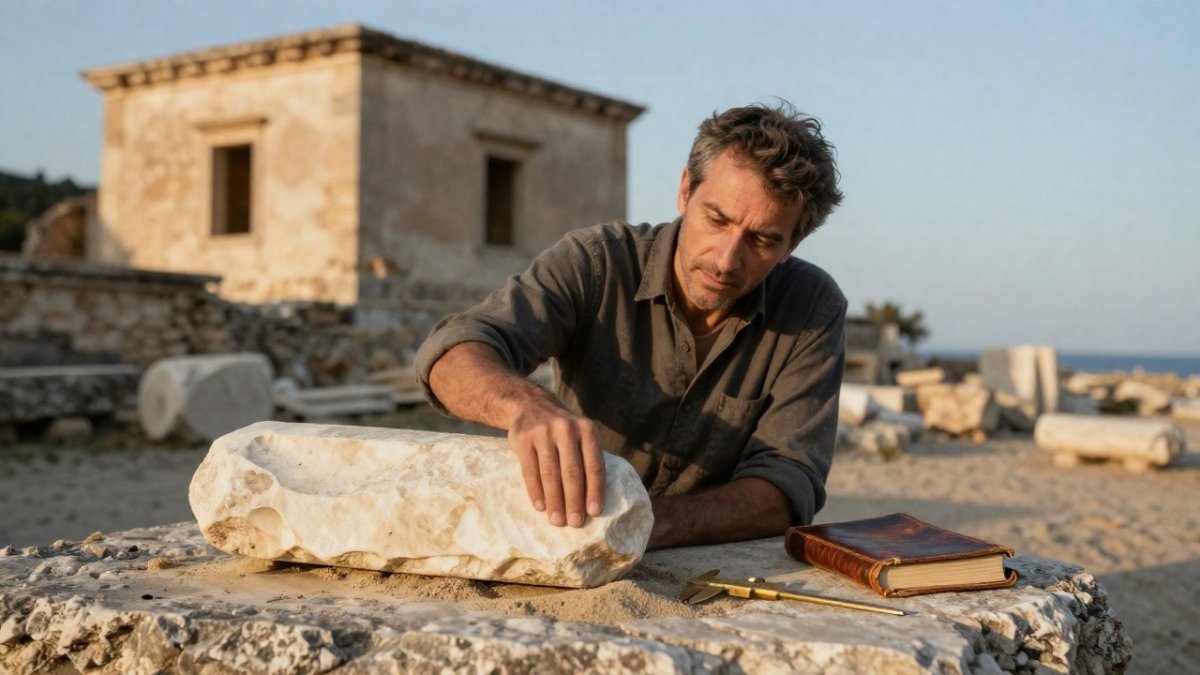
The main difference between a useful archaeological guide and a forgettable one is whether they interpret or merely recite. A recited script tells you a building's name and date. An expert explains why a wall was built in that style, what a fresco fragment suggests about trade, or why a street was laid out at a particular angle.
Joseph Walker, historian and author of Buried Italy, designs these programs with more than thirty years of research and guiding experience in Italy, and has guided more than three thousand groups. For readers who have been disappointed by scripted tours, this is the most important question to ask: can the guide answer follow-up questions that go beyond the placard? Readers can review the historian's two decades of guiding experience in Italy to see how this background shapes the programs.
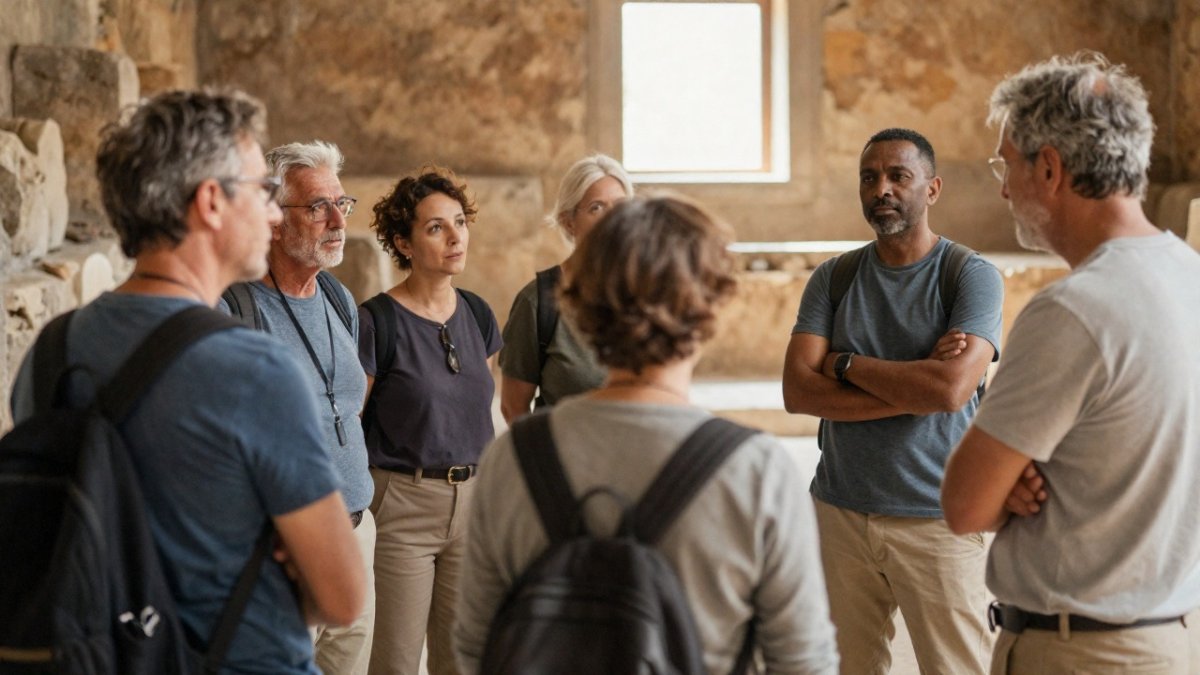
A practical test helps. Ask the operator how the guide prepares, whether they have published or researched the sites on the itinerary, and whether the group can expect discussion rather than a fixed monologue. Vague answers are a warning sign. Travelers who want this kind of specialist-led format can look into Historian led small group Italy programs.
Access and Pace: Logistics That Shape What You See
Logistics decide far more of an archaeological trip than most travelers expect, and the physical demands are where small-group planning earns its keep. Excavated sites are rarely flat or shaded: Pompeii's basalt streets are uneven and rutted by cart wheels, Herculaneum's decumanus runs over original stone paving, and the climb to the crater rim of the Phlegraean Fields involves loose volcanic ground and little cover from the sun. Before booking, ask for daily walking distances, the longest continuous stretch on foot, how much of the route is on uneven or stepped ground, and whether any site involves stairs, tunnels, or low ceilings such as the Greek cisterns beneath Naples.
Heat and season matter as much as distance, so ask the operator how the schedule handles hot weather and daylight at each site.
Mobility needs deserve a direct conversation rather than an assumption. Tell the operator about mobility aids, stamina limits, or health conditions in advance so the pace and route can be discussed before you travel.
Access to restricted areas is a separate logistical question. Some locations limit entry or require advance arrangements. Confirm in writing which areas are actually entered, whether any visit depends on permits or seasonal opening, and what happens if access is withdrawn.
Pompeii and Herculaneum Tours: What Small Groups Gain
Pompeii and Herculaneum are the sites most often mentioned in any discussion of archaeological travel, and they are also where small groups show their clearest advantage. Pompeii is large and can be overwhelming; a guide who knows the streets can explain how the city was organized, where daily life happened, and what the eruption preserved. Herculaneum is smaller and more intimate, and its better-preserved upper-floor evidence is easier to appreciate in a quiet group.
The Campania Felix program covers both sites as part of a wider look at the region. The aim is not a checklist of ruins but an understanding of how the Bay of Naples shaped Roman life, from the volcanic landscape to the villas along the coast. Readers who want the broader itinerary can review the Campania Felix tour and see how these visits fit together.
For a deeper look at the region's lesser-known sites, the guide to Naples-area sites most tours miss offers useful context before you travel.
Baia Submerged Archaeological Park and Coastal Sites
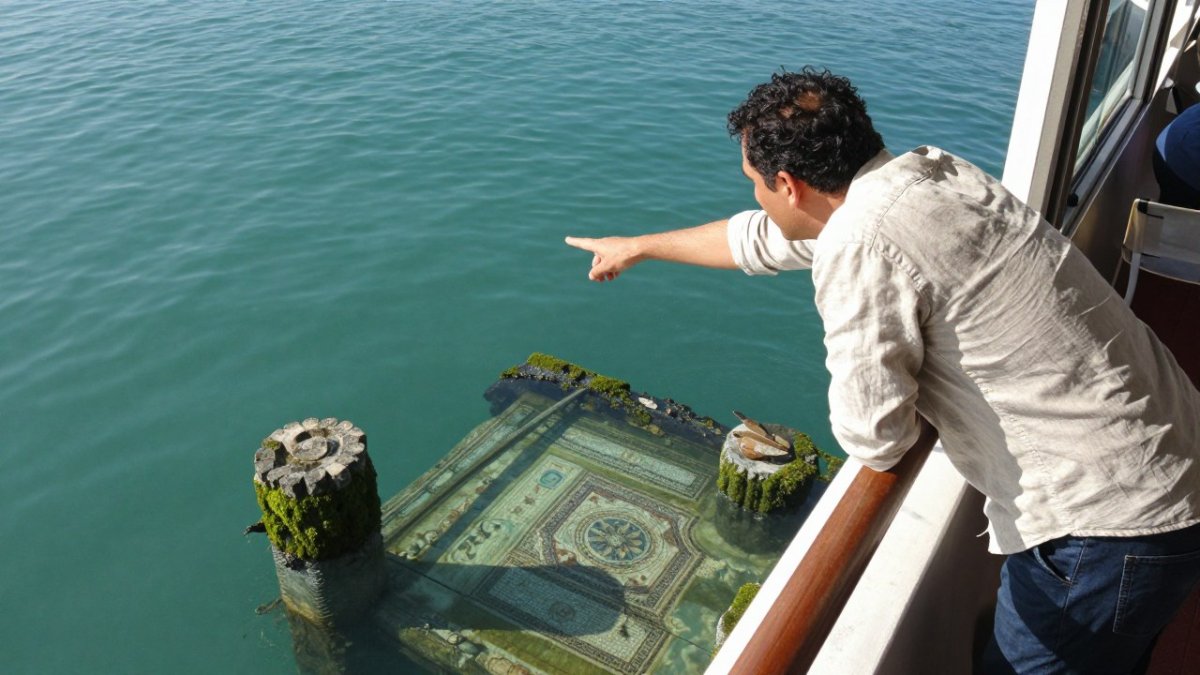
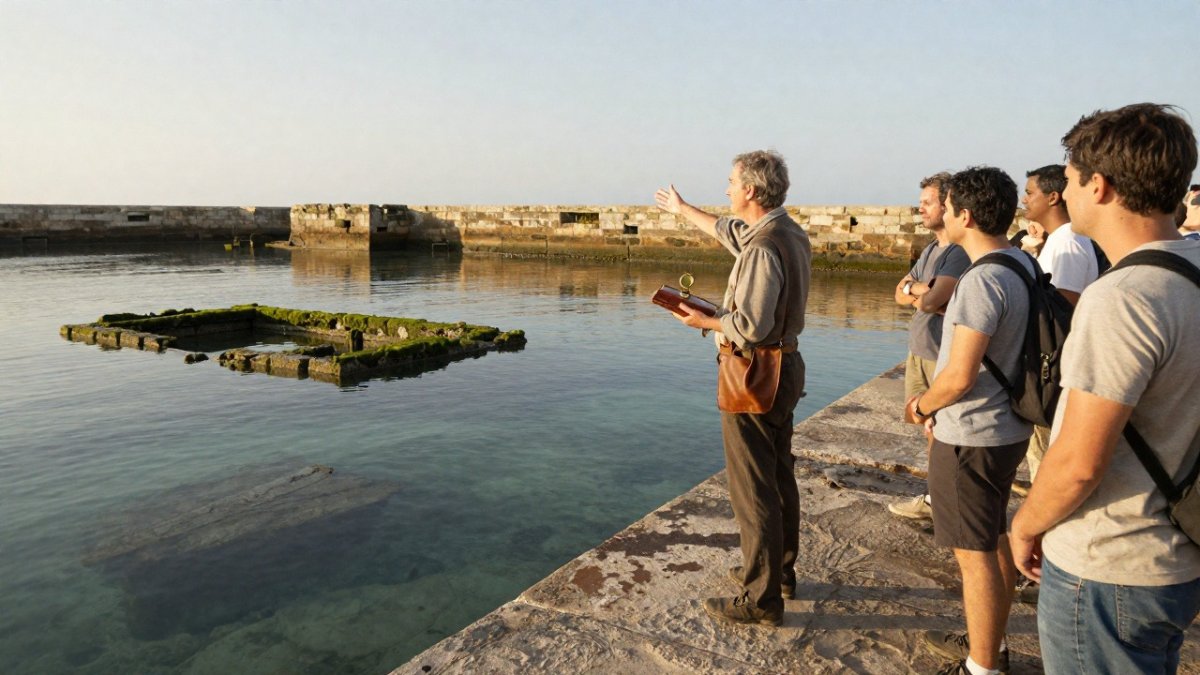
Baia is one of the most unusual archaeological settings in Italy. Parts of the Roman resort town now lie underwater, and the submerged remains can be viewed from the surface in a way few other sites allow. The location is a strong argument for small-group travel, since boat-based visits are easier to organize and adjust for a manageable number of people.
Coastal sites around the Phlegraean Fields also reward careful interpretation. The volcanic craters that Romans associated with the underworld, the Greek and Roman cisterns beneath Naples, and the harbor works of the ancient coast all connect into one story about how the region functioned. A specialist guide can link these places rather than presenting them as isolated stops.
Those planning a coastal itinerary can see how Baia fits into a multi-site route through the Campania Felix program.
Pros, Cons and Who Small Group Archaeology Suits
Small-group archaeological tours have clear strengths and real trade-offs, and weighing both against how you actually like to travel is the honest way to decide. The advantages are strongest where archaeology differs from ordinary sightseeing.
Pros
- Specialist interpretation: a guide who can explain excavation evidence, chronology, and competing interpretations rather than recite a plaque, and who can answer follow-up questions on the spot.
- More time on site and a pace set by curiosity, so a conversation about a drain, a threshold, or a fresco fragment can run its course instead of being cut off by a schedule.
- Easier access to quieter areas, off-peak timing, and specialist visits that depend on advance arrangements and a manageable headcount.
- Lighter pressure on fragile places: a group of eight can be moved through a delicate area, a narrow corridor, or a conservation zone with less wear and less crowding than a coach party.
- A shared group experience that turns individual sightseeing into a running conversation about how ancient people lived.
Cons
- Higher cost per day than a large coach tour is common for specialist, small-group programs; check current prices directly with Italian History with Joseph.
- Fixed departure dates limit flexibility compared with independent travel.
- Group chemistry matters, and not every traveler will click with every companion over a multi-day itinerary.
- The physical demands of uneven ground, heat, stairs, and long days on foot still apply, however small the group.
- A small group is not automatically a better one: if the guide is weak or the itinerary is thin, fewer people will not rescue the experience.
Small-group archaeology tends to suit travelers who enjoy history and want depth over breadth, who are comfortable with a structured itinerary, and who value conversation with a specialist. It is less suited to travelers who want to wander freely, who prefer to tick off as many places as possible in a short time, or who need a fully step-free route throughout.
Ask how the operator handles site etiquette and conservation, since visitors are generally expected to follow site rules and photography limits, which vary by site.
How to Choose an Archaeological Tour Before You Book
Choosing a tour is easier when you know what to check. Start with the guide. Look for evidence of research, publications, or a track record of leading groups at the sites on the itinerary. A guide's background matters more than a glossy brochure.
Next, read the itinerary closely. Count the walking, check whether the sites are included or only mentioned, and confirm which areas are accessed through a specialist arrangement. Ask how the group size is capped and what happens if departures do not fill.
Finally, ask practical questions about support: what happens if a traveler becomes unwell, how transfers are handled, and what the cancellation terms are. Program details are available on the tours page, and you can ask specific questions about pace, access, and group size before you commit.
The right tour is the one whose format matches how you like to travel. A small group with an expert guide will change how you see ancient Italy, but only if the logistics, pace, and interpretation fit your expectations.
Small-group archaeology is about seeing ruins as evidence of real lives. If you want that kind of depth, explore Italian History with Joseph's historian-led programs and plan a journey built around the sites that matter most to you.
Frequently Asked Questions
What are the benefits of a small group archaeological tour?
Small groups allow more direct interaction with the guide, so questions can be discussed in more depth. The pace can flex around what interests the group most. Benefits depend on the specific tour, so compare group size, guide background and itinerary before booking with Italian History with Joseph.
How many people are usually on a small group history tour?
Check the group size listed for the specific tour you are considering, since the maximum can vary by departure. Ask the operator directly about group limits and guaranteed departure dates before you commit.
Are small group archaeological tours better than visiting sites independently?
Visiting independently gives full flexibility, but archaeological sites are easier to understand with an expert explaining what remains, how it was used and why it matters. A historian-led group can also provide context that is helpful to assemble on your own. Independent visits can still suit travelers who already know the history well. The better choice depends on how much interpretation you want and how much planning you are willing to do.