
 blog
blog
Is Historian-Led Travel Worth the Cost? A 2026 Guide
Table of Contents
- Why Expert-Led Travel Commands a Higher Price
- The Hidden Costs of DIY Historical Travel
- Best Small Group History Tours: What Sets Them Apart
- How to Choose a Historical Tour Guide
- Archaeological Tour vs Standard Sightseeing: The Depth Difference
- Group Size, Dynamics, and the Quality of Your Experience
- How to Budget for a Historian-Led Journey
- Frequently Asked Questions
Last Updated: October 1, 2026
Why Expert-Led Travel Commands a Higher Price
Is historian led travel worth the cost, and what does historian led travel actually include? For travelers who want more than a photo stop, the answer usually comes down to what they bring home. Historian-led travel is a style of guided journey where a specialist with deep academic or field expertise interprets sites for a small group, rather than a general guide reciting memorized facts. This guide from Italian History with Joseph breaks down what that expertise costs, what it replaces, and how to judge whether the premium fits your travel goals.
The case for paying more rests on a simple trade: you exchange money for access, context, and a narrative that ties scattered ruins into one story.
The Value Proposition of a Guided Excursion
A guided excursion with a historian delivers three things a standard tour rarely does: expert interpretation, physical access to lesser-known sites, and a coherent storyline across a region. Many travelers find the storytelling is what lingers, not the ticket price.
When you walk the volcanic craters of the Phlegraean Fields, the landscape stops being scenery and becomes a doorway the Romans genuinely feared.
What Travelers Actually Pay For: Access, Context, and Narrative
What you pay for is not the walking. It is the years of research standing beside you. Access to sites most guidebooks skip, context that explains why a place mattered, and a narrative that connects one stop to the next.
UNESCO World Heritage Centre guidance on heritage interpretation emphasizes that interpretation is central to how visitors understand and value cultural sites.
The Hidden Costs of DIY Historical Travel
Independent travel looks cheaper on the surface because the visible line items, airfare, hotel, train tickets, entry fees, are easy to compare. What rarely appears in the spreadsheet is the research and logistics burden that shifts onto you the moment you decide to go it alone. The hidden costs of DIY historical travel are real, and they fall into four categories most travelers never budget for.
1. Pre-trip research hours. Planning a history-focused itinerary means reading site histories, cross-referencing opening hours that change seasonally, checking which excavations are currently accessible, and building a route that makes geographic sense. A common pattern among independent travelers is dozens of hours of reading before departure, time that is effectively unpaid labor.
2. On-the-ground logistics. Trains, buses, ferries, parking, timed entry slots, and the gap between what a map shows and what a road actually does. Every transfer you coordinate yourself is a transfer you are not spending looking at anything.
3. Missed context. This is the quietest cost. You can stand in front of the Naples Underground cisterns or the submerged ruins at Baia and see them without ever learning what they were for, who built them, or why they matter. The ticket was cheap; the understanding was absent.
4. Missed sites. Guidebooks cluster around headline attractions. The Phlegraean Fields, the glass-bottom boat over Baia, the Greek cisterns beneath Naples, these are exactly the places that reward prior knowledge.
Calculating Your Travel ROI: Solo vs. Group Travel
Travel ROI is the value you get back, in insight and enjoyment, for every euro and hour spent. The framework below is not a price comparison, it is a way to see which costs are visible and which are hidden.
Cost Factor | Solo DIY Travel | Small Group Historian-Led |
|---|---|---|
Pre-trip research time | High, all on you | Minimal, itinerary built for you |
On-site interpretation | Whatever you read | Expert commentary throughout |
Access to lesser-known sites | Hard to arrange | Built into the itinerary |
Logistics and transport | You coordinate everything | Handled by the operator |
Risk of missing context | High | Low |
Cost per hour of expert insight | Not applicable, no expert present | Spread across the group and the days |
A useful way to think about the last row: a historian-led program concentrates expertise into every walking hour of the trip. A DIY trip concentrates your own research into the hours before you leave, then leaves you alone with the ruins.
A Concrete Way to Compare the Two
Before you book anything, write down three numbers for the DIY version of your trip: the hours you expect to spend planning, the number of sites you can name that a standard guidebook would not include, and the number of days you are willing to lose to logistics. Then ask the same three questions of any historian-led itinerary. The comparison is rarely about the headline price.
Best Small Group History Tours: What Sets Them Apart
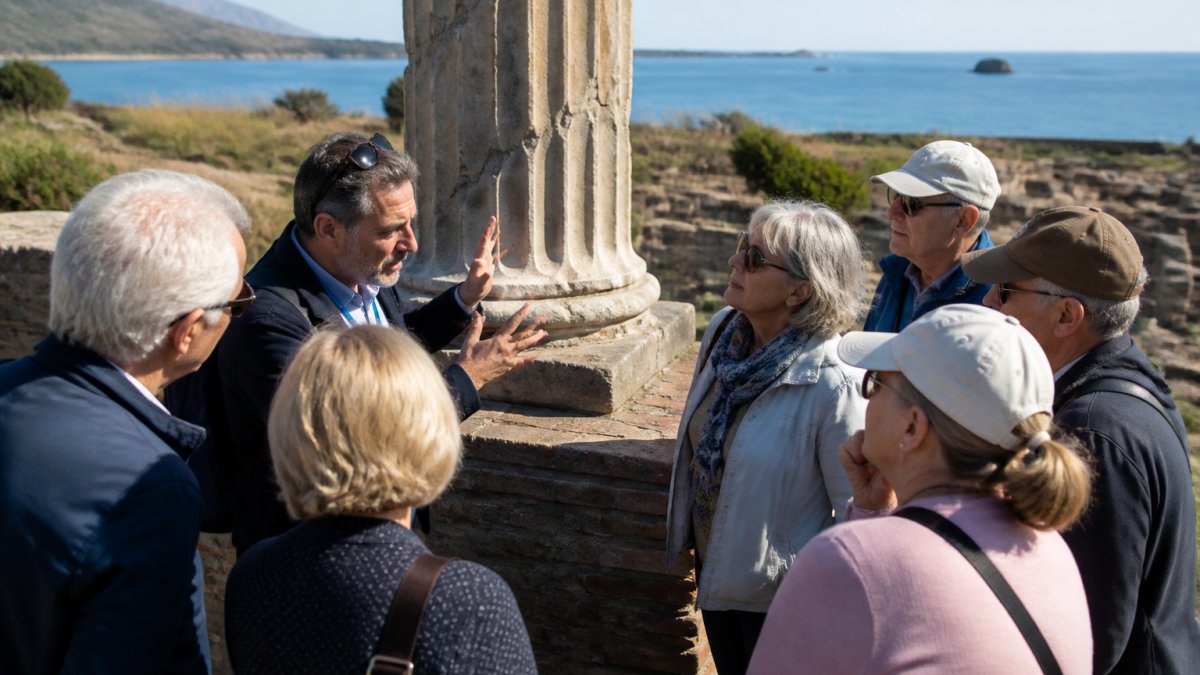
The best small group history tours share recognizable traits: a genuine expert leading, a capped group size, access to sites beyond the standard circuit, and unhurried time to absorb what you are seeing. Historian led small group Italy programs build every trip this way, with historian and author Joseph Walker designing each itinerary and leading travelers through more than thirty years of research.
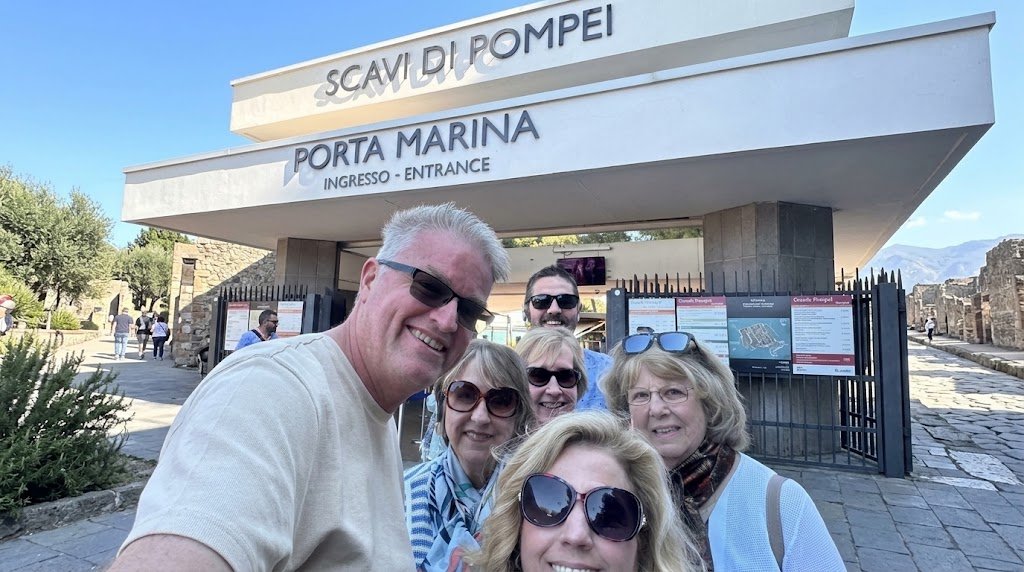
A historian led travel group explores the sunken ruins of Portus Julius at sunset.
What separates these tours from standard offerings is not the list of famous names. It is the sites few visitors ever reach, like the sunken ruins of Portus Julius, and the stories that make them matter.
How to Choose a Historical Tour Guide
Choosing a historical tour guide comes down to verifying expertise, not trusting marketing copy. The word "historian" is used loosely in travel marketing, and the difference between a guide who has read about a site and one who has studied it for decades is significant. Here is how to tell them apart before you book.
Vetting Credentials: What to Look For Before You Book
Start with the named leader. A serious operator will name the historian leading the departure and point to verifiable work: published books, academic affiliations, documentary consultation, museum collaborations, or a documented field record at the specific sites on the itinerary. If the operator cannot name the leader, that is the first signal.
Then test site specificity.
- Is the guide named, with verifiable published work or media consultation?
- Does the operator list specific, unusual sites rather than only headline attractions?
- Is the group size capped and stated clearly?
- Are departures guaranteed, or contingent on filling a bus?
- Can they describe their physical pace and daily walking expectations?
- Can they explain how they handle questions the leader does not know the answer to?
Red Flags and Green Flags
Red flags: no named leader, vague site lists, group sizes described only as "small," departures contingent on minimum numbers, and itineraries that read like a greatest-hits list of famous names with no thread connecting them.
Archaeological Tour vs Standard Sightseeing: The Depth Difference
The difference between an archaeological tour and standard sightseeing is depth of interpretation. Standard sightseeing shows you what a site looks like. An archaeological tour explains what it meant, how it was built, and what the evidence actually tells us.
Group Size, Dynamics, and the Quality of Your Experience
Group size shapes everything: how much you hear, how often you can ask questions, and whether you feel like a traveler or a passenger. Smaller groups mean more access and better conversation.
How to Budget for a Historian-Led Journey
Budgeting for a historian-led journey means planning around value, not just the headline price. Pricing depends on the itinerary, dates, group size, and inclusions, so ask Italian History with Joseph directly for current figures rather than guessing.
Frequently Asked Questions
What is the difference between a standard tour guide and a historian-led tour?
A standard guide typically delivers memorized facts and dates, while a historian-led tour draws on years of research to explain why events happened and how they connect. Joseph Walker, for example, brings over thirty years of research and has guided more than three thousand groups. That depth turns a site like Pompeii from a collection of ruins into a vivid story about the people who lived there. You get context, not just commentary.
How do I choose the right historical tour for my interests?
Start by identifying which periods and themes genuinely excite you, whether that's Roman engineering, Greek mythology, or medieval kingdoms. Then look for operators whose itineraries go beyond the obvious stops. Ask specifically which sites are included that other tours skip, such as the sunken ruins of Portus Julius. Check group size, guide credentials, and whether the pace matches your fitness level. A focused itinerary that matches your passion beats a broad one every time.
Is it worth paying more for an expert-led historical tour?
The answer depends on what you value. Expert-led travel typically costs more upfront, but it eliminates hidden DIY expenses like separate site guides, transport between remote locations, and hours of pre-trip research. More importantly, a historian's narrative transforms how you understand a site. If you want to walk away with real insight rather than photos, the premium often pays for itself in depth and access you cannot replicate on your own.
What are the benefits of small group historical travel?
Small groups mean you can actually hear the guide, ask questions, and move through sites without blocking other visitors. Group dynamics tend to be more relaxed, and you often gain access to places that large coaches cannot reach. With guaranteed departures and intimate numbers, the experience feels personal. You also share meals and conversations with like-minded travelers, which many people find as memorable as the history itself.