
 blog
blog
Hidden Historical Sites in Italy: 7 Forgotten Treasures
Table of Contents
- Why Hidden Historical Sites Matter to Serious Travelers
- The Submerged Ruins of Baia: A Glass-Bottom View into Roman Luxury
- Matera Cave Dwellings History: Stone-Carved Neighborhoods Built 9,000 Years Ago
- Portus Julius and the Phlegraean Fields: Walking Ancient Volcanic Gateways
- Naples Underground: Greek Cisterns and Roman Tunnels Beneath the City
- Best Time to Visit Off the Beaten Path Italian Ruins: Seasonal Strategy for Hidden Archaeological Sites
- Guided Historical Tours of Italy: How Expert-Led Exploration Changes What You See
- Off the Beaten Path: Accessing Sites Most Travelers Never Reach
- Frequently Asked Questions
Last Updated: October 4, 2026
Why Hidden Historical Sites Matter to Serious Travelers
Most travelers follow the same script: Rome, Florence, Venice, maybe Pompeii. They stand in lines with thousands of others, snap photos, and move on. But the real Italy, the one that shaped empires and myths, lives in places few visitors ever reach.
Hidden historical sites in Italy tell stories the guidebooks skip. These are the ruins where emperors actually walked, the caves carved 9,000 years ago, the submerged cities you can only see through glass-bottom boats. They're the places where history feels alive because you're not competing with tour buses to experience it.
At Italian History with Joseph, we've spent more than thirty years finding these forgotten treasures. The sites we explore aren't accidents. They're carefully chosen because they reveal something essential about how ancient people lived, believed, and built their worlds. When you stand in front of a 2,000-year-old Roman tunnel beneath Naples, or peer down at submerged marble columns through crystal-clear water, the history stops being abstract. It becomes real.
This guide covers some of the most compelling hidden historical sites in Italy. Each one offers something different: submerged luxury, stone-carved neighborhoods, volcanic gateways to the underworld, and underground cities frozen in time. More importantly, each one changes how you understand Italy's past.
The Submerged Ruins of Baia: A Glass-Bottom View into Roman Luxury
Baia was Rome's most exclusive resort town. Emperors, generals, and the wealthiest families built villas here along the Bay of Naples. Then, around 500 AD, the land sank. The sea claimed what Rome had built.
Today, you can see it all from a glass-bottom boat. Marble columns rise from the seafloor. Statues stare up from the depths. Mosaics that once decorated palace floors are still visible beneath the water. It's like stepping into a time capsule, except the capsule is underwater.
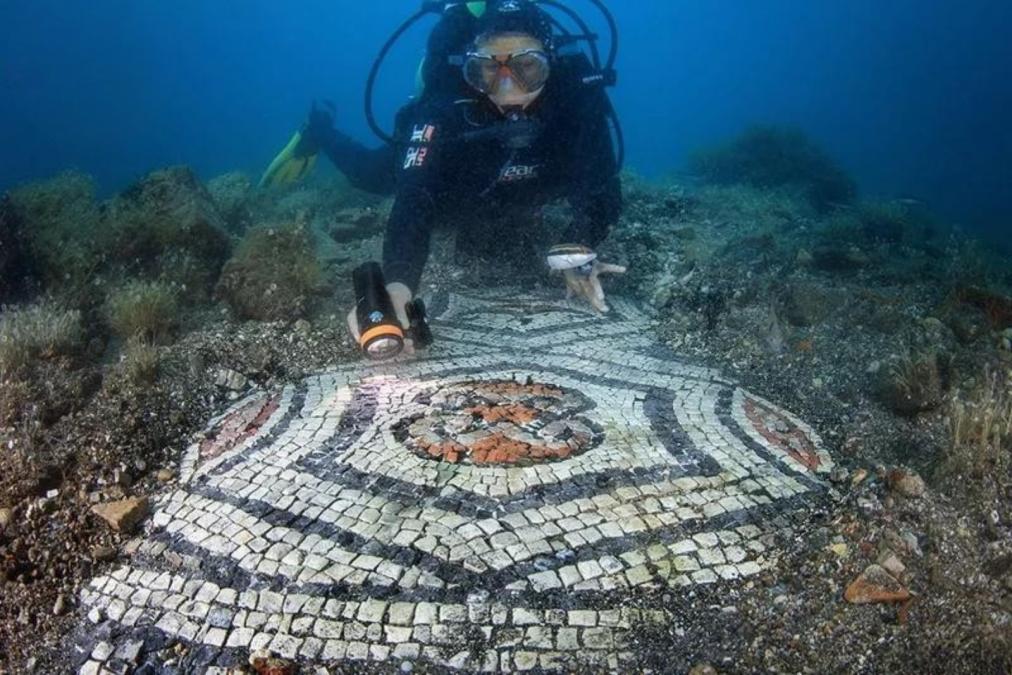
Visitor viewing submerged Roman marble columns through a glass-bottom boat, one of the hidden historical sites in Italy.
What makes Baia remarkable is the preservation. The water protected these ruins from looters and weather. You see Roman concrete still intact. You see the actual layout of streets and homes. Most archaeological sites show you fragments. Baia shows you an entire city.
The submerged ruins of Baia were once home to some of Rome's most powerful citizens. Pliny the Younger wrote about the villas here. Cicero owned property in Baia.
Getting there is straightforward. Baia is near Naples, accessible by train, car or on an in-depth program with Italian History with Joseph. Tours depart regularly.
Matera Cave Dwellings History: Stone-Carved Neighborhoods Built 9,000 Years Ago
Matera is different from every other historical site in Italy. There are no grand temples here. No famous sculptures. What Matera has is something rarer: an entire city carved directly into stone, with people still living in some of these caves today.
The Sassi, the old neighborhood, consists of thousands of dwellings cut into the limestone cliffs. Some date back 9,000 years. Families carved rooms into the rock. They created streets by leaving stone pillars between caves. Water channels were cut into the stone to direct rainfall into cisterns. It's engineering on a scale that's hard to grasp until you walk through it.
Most visitors never see Matera. It's not on the standard Italy itinerary. But if you want to understand how ancient people actually solved problems, water management, shelter, community layout, Matera teaches you more than any textbook.
The Matera cave dwellings history is a story of adaptation. For centuries, families lived in these caves. They were cool in summer, warm in winter. The stone itself was the building material. No wood needed. No nails. Just human ingenuity and stone.
In the 1950s, the Italian government moved residents out of the caves, considering them unsanitary. But over the past two decades, people have moved back. Now some caves are homes again. Others are restaurants, hotels, and galleries.
Portus Julius and the Phlegraean Fields: Walking Ancient Volcanic Gateways
Portus Julius was Rome's first major naval base. It was built around 37 AD by Emperor Caligula. The port connected Rome to its empire. Ships carrying grain, soldiers, and goods passed through these waters. Then, like Baia, it sank, not gradually, but because of volcanic activity.
The Phlegraean Fields surround this area. Romans believed these volcanic craters were literal gateways to the underworld. Aeneas supposedly entered the underworld here. The name itself means "burning fields." Sulfur vents still release gases from the earth. The ground is warm. Steam rises from cracks in the stone.
Walking through the Phlegraean Fields, you understand why Romans saw this as a place of mystery and power. The landscape is alien. The air smells of sulfur. The earth beneath your feet feels unstable. This wasn't just mythology to Romans, it was a visceral experience of forces beyond human control.
Portus Julius lies partially submerged now, but you can still see the breakwaters and harbor structures from the shore.
What most travelers miss is the connection between the mythology and the geology. Romans weren't being poetic when they called this the gateway to the underworld. They were describing what they actually experienced: a landscape of fire, sulfur, and volcanic power. Standing here, you feel it too.
Naples Underground: Greek Cisterns and Roman Tunnels Beneath the City
Beneath Naples's streets lies another Naples. Greek cisterns. Roman tunnels. Medieval passages. Entire neighborhoods carved underground. Most people walk over these spaces without knowing they exist.
The underground system developed over 2,500 years. Greeks quarried stone for building, creating large cavities. Romans expanded the network, building aqueducts and cisterns to manage water. During World War II, residents sheltered in these tunnels during bombing. Layers of history are literally stacked on top of each other.
Guided tours take you through sections of Naples Underground. You walk through Roman cisterns carved from solid rock. You see graffiti from different centuries. You pass through passages so narrow you have to turn sideways. It's claustrophobic and exhilarating at the same time.
What makes Naples Underground special is the intimacy. You're not in a museum. You're in actual structures people built and used. The air is cool. The stone is rough. Your guide's flashlight illuminates carvings made 2,000 years ago. It feels like you're discovering something that was meant to stay hidden.
Best Time to Visit Off the Beaten Path Italian Ruins: Seasonal Strategy for Hidden Archaeological Sites
Timing matters more than most travelers realize. The same site feels completely different depending on when you visit.
Spring (April-May) and fall (September-October) are ideal for hidden historical sites in Italy. The weather is mild. The crowds are manageable. Sites that are packed in summer feel almost private.
Summer is tempting because of long days and warm weather. But popular sites get overwhelmed. Smaller sites can be uncomfortable in heat. If you visit in summer, go early, arrive at sites by 8 or 9 AM, before crowds build.
Winter (November-February) is underrated. Many sites have fewer visitors. The light is different, lower angle sun creates dramatic shadows on stone. Some sites close or reduce hours, so check ahead. But if you can handle cooler weather, winter offers a different kind of beauty.
Rain affects underground sites differently than outdoor ruins. Naples Underground is unaffected by weather. Outdoor sites like the Phlegraean Fields become slippery but more atmospheric. Plan indoor activities for rainy days.
The best time to visit Italian ruins depends on what you want. Solitude? Visit in winter or shoulder seasons. Photography? Spring and fall offer the best light. Comfortable walking? Spring and fall again. Heat tolerance? Summer works if you start early.
Guided Historical Tours of Italy: How Expert-Led Exploration Changes What You See
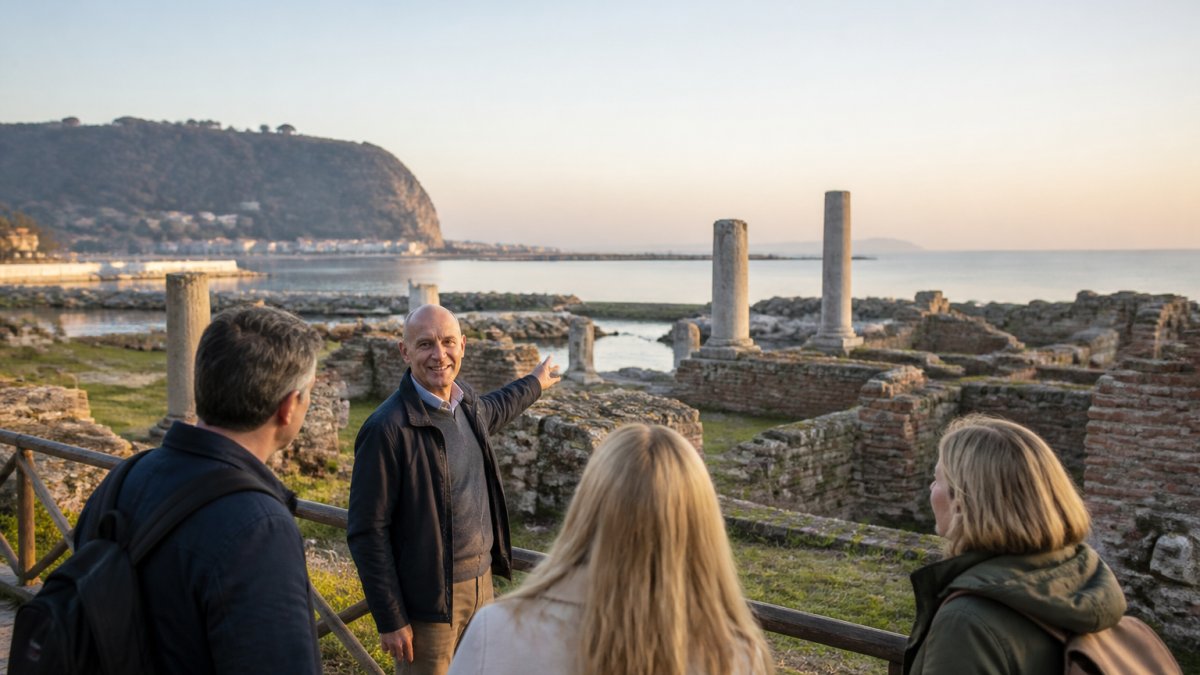
An expert guide transforms what you see. Without one, Baia is just beautiful underwater ruins. With a guide who knows the history, those ruins become the vacation homes of emperors, the sites of political intrigue, the physical evidence of Rome's wealth and power.
Expert-led exploration changes everything. A guide explains why Romans built where they built. Why certain structures survived and others didn't. What the artifacts tell us about daily life. The stones themselves become a narrative.
This is why guided historical tours of Italy matter. The best guides have spent years studying their sites. They understand the myths and the history together. They can answer unexpected questions because they've thought deeply about these places.
When you walk through Matera with someone who understands its 9,000-year history, you see it differently. The carved stones aren't just old. They're a record of how people solved problems across millennia. The same caves where families lived in 7000 BC still shelter people today. That's profound. An expert guide helps you grasp that profundity.
The difference between a tour and a real exploration is expertise. Anyone can show you a site. An expert shows you what the site means.
Off the Beaten Path: Accessing Sites Most Travelers Never Reach
Most programs cover the same sites. Pompeii. Herculaneum. The Colosseum. These are essential, but they're not hidden. Thousands of people see them every day.
The sites in this guide require more effort. They require planning. They require expert guides who know where to go and how to access them. But that effort is exactly what makes them valuable.
Portus Julius isn't on most tourist maps. You won't find a gift shop there. Baia's underwater ruins require a specific boat tour. The Phlegraean Fields feel remote even though they're near Naples.
This is where real travel happens. When you step beyond the guidebook, you find places that still feel like discovery. You find sites where history hasn't been packaged for mass consumption.
Accessing these sites means being intentional. It means booking guides in advance. It means reading beyond the standard travel guides.
The hidden historical sites in Italy aren't hidden because they're hard to find. They're hidden because most travelers never look.
Italian History with Joseph specializes in exactly this kind of exploration. Our historian-led small-group tours are designed around sites like these: the places where history is most vivid because fewer people have walked there.
If you're ready to explore beyond the guidebook, historian-led small group Italy programs are built for exactly this purpose.
Frequently Asked Questions
What are some off-the-beaten-path hidden historical sites in Italy that most travelers miss?
Beyond Pompeii and Rome, Italy holds remarkable lesser-known archaeological treasures. The submerged ruins of Baia offer a unique window into Roman seaside luxury accessed via glass-bottom boat. Matera's Sassi district reveals 9,000 years of continuous habitation carved directly into limestone. The Phlegraean Fields showcase volcanic craters the Romans believed were doorways to the underworld. Naples Underground preserves Greek cisterns and Roman tunnels beneath the modern city. These sites reward curious travelers willing to venture beyond standard guidebook recommendations and often require expert guidance to fully understand their historical significance.
Are there any submerged Roman cities in Italy that visitors can actually see?
Yes. Baia, near Naples, is one of the few submerged Roman cities accessible to travelers. Once a luxurious coastal resort for emperors and wealthy Romans, the city sank due to volcanic activity and rising sea levels. Today, visitors can view the preserved ruins—including columns, mosaics, and building foundations—through glass-bottom boats or by snorkeling with proper guidance. The submerged ruins of Baia represent an extraordinary archaeological site frozen in time underwater, offering insights into Roman leisure culture and engineering that few other locations can match.
What is the best time to visit Italian ruins to avoid crowds and see them properly?
Late April through May and September through October offer ideal conditions for visiting hidden historical sites in Italy. Spring brings wildflowers and comfortable temperatures without summer crowds. Fall provides clear skies and moderate weather. Winter (November–February) sees fewer tourists but shorter daylight hours and occasional rain. Summer (June–August) brings peak crowds and heat. Visiting during shoulder seasons allows you to explore at a thoughtful pace with expert guides, read inscriptions clearly, and experience the landscape as it was meant to be encountered—without the rush.
How do guided historical tours in Italy differ from visiting these sites on your own?
Guided historical tours led by experienced historians transform isolated ruins into coherent narratives. An expert guide contextualizes what you're seeing—explaining why a particular basilica was positioned where it stands, how a necropolis reflects social hierarchy, or what a fresco reveals about daily Roman life. Many hidden sites lack interpretive signage or are difficult to access without local knowledge. Historian-led small-group tours provide insider knowledge about seasonal timing and logistical challenges, and the ability to ask questions in real time. This transforms sightseeing into genuine historical understanding grounded in decades of research and fieldwork.