
 blog
blog
Best Small Group History Tours: A Buyer's Guide
Table of Contents
- What Historian-Led Tours in Italy Offer That Standard Guides Cannot
- Archaeological Travel Experiences: Beyond the Guidebook
- How to Choose a Historical Tour Company: Three Critical Factors
- Designing Immersive History Travel Itineraries: What Sets Them Apart
- The Real Value: What You're Actually Paying For
- Frequently Asked Questions
Last Updated: October 2, 2026
Why Small Group History Tours Outperform Large Bus Tours or Even the DIY Approach
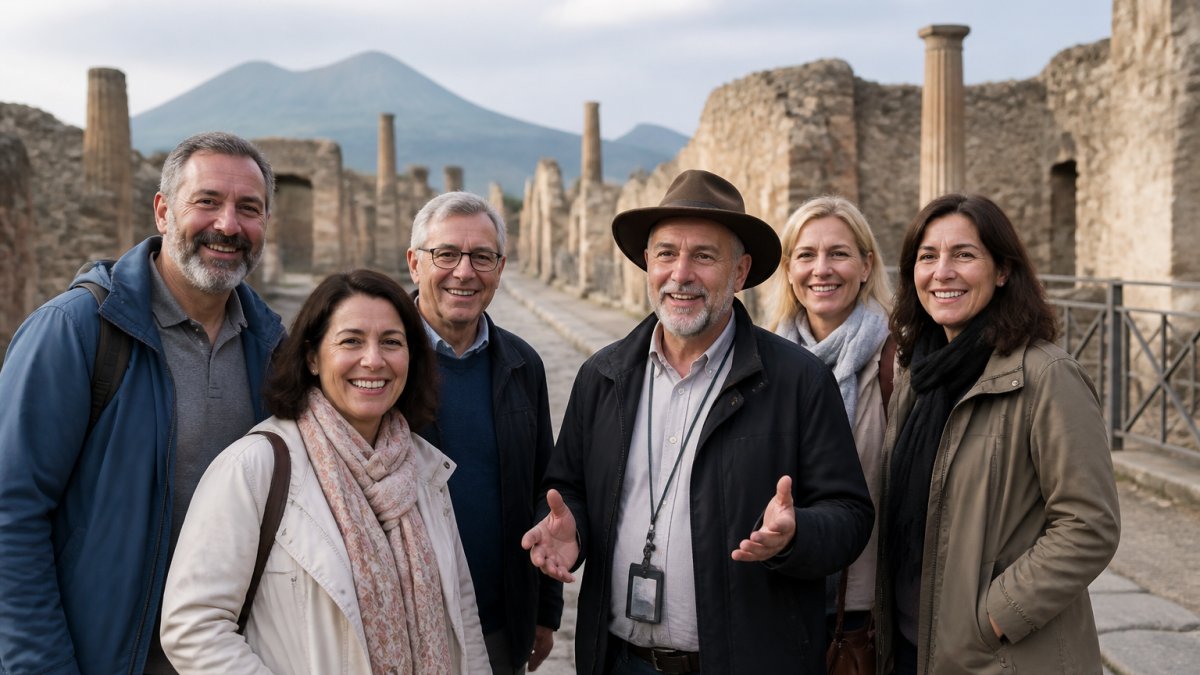
Small group history tours fundamentally change how you experience ancient sites. Instead of standing in a crowd of 50 people straining to hear a guide's amplified voice, you're walking with 8-12 travelers who actually engage with the historian leading you. The difference isn't subtle. It's the difference between visiting a site and understanding it.
Large bus tours move through landmarks on fixed schedules. Small group history tours linger where it matters. A historian might spend 20 minutes explaining how a column's engineering kept it standing 2,000 years, then move on when questions are answered.
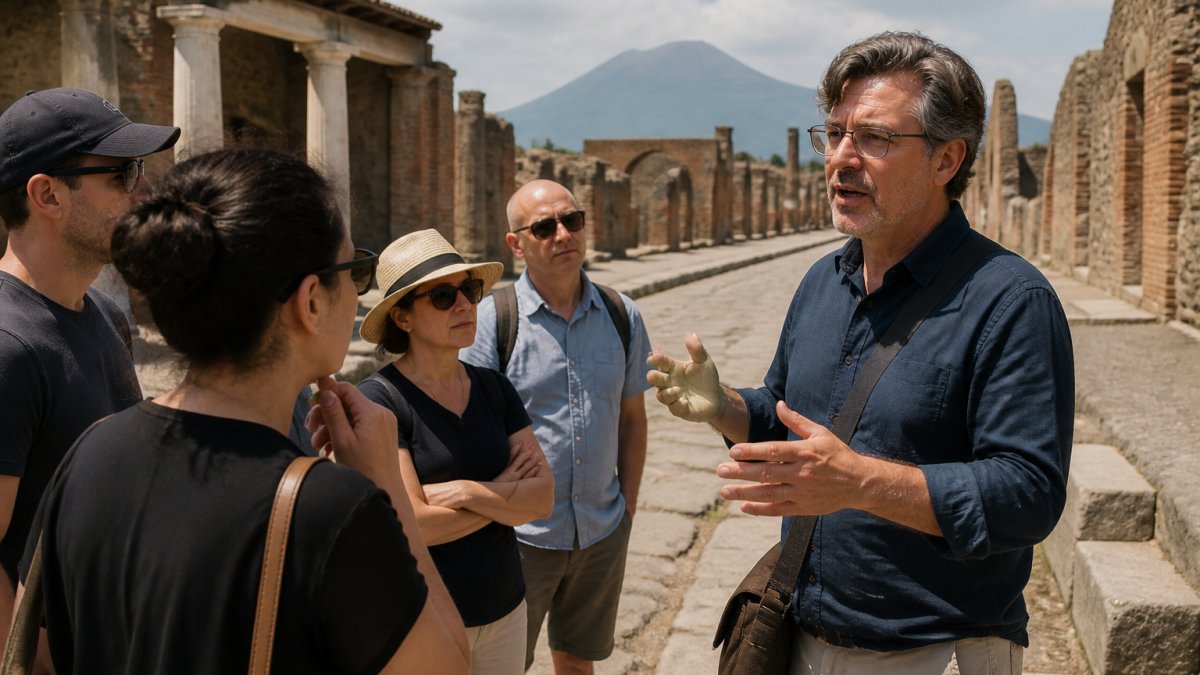
Small group history tours fundamentally change how you experience ancient sites. Instead of standing in a crowd of 50 people straining to hear a guide's amplified voice, you're walking with 8-12 travelers who actually engage with the historian leading you. The difference isn't subtle. It's the difference between visiting a site and understanding it.
Large bus tours move through landmarks on fixed schedules. Small group history tours linger where it matters. A historian might spend 20 minutes explaining how a column's engineering kept it standing 2,000 years, then move on when questions are answered.
Intimacy creates space for real conversation. The guide adjusts pace based on group interests, exploring Roman engineering deeper if someone's fascinated, or weaving in mythology if another traveler wants it. And the conversation doesn't end at the site gate. A group of 8-12 fits around a single table at a family-run trattoria, so the morning's questions carry on over a long lunch of regional dishes and local wine.
Going it alone has its appeal: your own pace, your own table at lunch. But a guidebook and an audio app can't answer a follow-up question, can't open a site that's closed to the public, and can't tell you which of the trattorias near the ruins is the one worth sitting down in. On a DIY trip you also spend your evenings working out tomorrow's tickets and transport instead of enjoying tonight's dinner. A small group gives you the freedom of independent travel, with a historian doing the hard part.
Small group history tours access places large groups can't reach: narrow streets in ancient neighborhoods, private museums, and excavations still being studied. With a historian like Joseph Walker, who's spent thirty years researching Italy's hidden stories, you're following someone who knows which doors open.
The educational depth changes everything. A guide reading from a script can't match a historian who's written books on the subject and spent decades in the field. That expertise is the real value of small group history tours, and it's what makes each day feel like a discovery rather than a schedule.
What Historian-Led Tours in Italy Offer That Standard Guides Cannot
A historian-led tour isn't a sightseeing experience with better commentary. It's a fundamentally different product, and a far more exciting one. The difference lies in what the guide actually knows and can do with that knowledge.
Standard guides follow scripts and recite facts. A historian-led tour explains why those facts matter and how they connect to broader patterns. A standard guide points out a Roman aqueduct; a historian explains the engineering innovation, the political power required, and what it reveals about Roman priorities. Suddenly you're not looking at old stones. You're looking at a decision someone made.
Context transforms experience. Standing before the Greek temples of Agrigento becomes profound when a historian explains who built them and why a city poured its wealth into stone. In Herculaneum, carbonized wooden furniture and food left in the kitchens show how a household lived on its last day. At Cumae, the oldest Greek colony on the Italian mainland, Greek and Roman ruins stand side by side. You're reading a story written in stone and ash.
The story carries on at the table. The streets of Herculaneum and Pompeii are lined with thermopolia, the hot-food counters where ordinary Romans bought lunch, and the Bay of Naples was known for garum, a fermented fish sauce. The anchovy colatura still made on the nearby Amalfi Coast is often called its descendant, and local grapes such as Greco and Falanghina are traditionally traced back to Greek and Roman vineyards. With a historian beside you, a plate of pasta and a glass of wine become one more piece of evidence, and a delicious one.
Historian-led tours include access standard tours can't provide. Academic credentials and decades of field experience open museum doors and excavation sites not in guidebooks. Italian History with Joseph includes sites like the sunken ruins of Portus Julius, a location few visitors ever reach.
A standard guide delivers information; a historian tells stories connecting you to the people who lived there. You learn why events mattered to them, how they thought, what they valued, even what they ate. That narrative approach makes history stick. You come home with stories, not just facts.
Archaeological Travel Experiences: Beyond the Guidebook
Archaeological travel experiences place you inside active discovery rather than passive observation. It's the difference between reading about history and understanding how archaeologists actually learn from artifacts.
When you travel with a historian leading small group history tours focused on archaeology, you're often visiting sites still being studied. A pottery shard isn't just a broken cup. It's evidence of trade routes, daily life, economic systems. An amphora tells you what was shipped (wine, olive oil, fish sauce) and how far a Roman family's dinner traveled to reach them. The guide explains methodology: how archaeologists date findings, what soil composition reveals, why object position matters as much as the object itself.
This educational approach transforms how you see ruins. You stop looking at broken columns and start seeing evidence. You understand that archaeology isn't about finding treasure. It's about reconstructing human behavior from fragments. There's a real thrill in the moment a pile of stones turns into a kitchen, a shop, a street corner. That shift in perspective is what archaeological travel experiences deliver that standard sightseeing can't.
Archaeological travel experiences include lesser-known sites not fully excavated or famous enough for mass tourism: a Magna Graecia site in Calabria, or the Phlegraean Fields, volcanic craters the Romans believed were doorways to the underworld. These places let you think, where the guide's expertise shapes what you see rather than the crowd's camera angles. They also sit in corners of Italy where the cooking is as distinctive as the ruins. In Calabria, the olive oil and wine on the table belong to a tradition the Greek settlers helped establish.
Hands-on elements deepen understanding further.
How to Choose a Historical Tour Company: Three Critical Factors
Selecting the right small group history tours company requires evaluating more than price and destination. You're investing in expertise, access, and experience. These three factors separate tours that educate from tours that merely transport.
Expertise and Academic Credentials
The guide's background determines quality. Ask: Does the guide have formal training in history or archaeology? Have they published work on the subject? How long have they been guiding in this region?
A historian with academic credentials brings depth that a trained tour guide can't match. They've done original research, understand methodology, and can answer unexpected questions because they understand broader context, not just the script. That's also what makes the days more fun: any question you ask can lead somewhere unplanned.
Joseph Walker, who leads historian led small group Italy programs, brings over thirty years of research experience in Italy, has authored books on Italian history, and has consulted for History Channel, BBC, and Discovery Channel. That credential level justifies calling a tour "historian-led."
Group Size and Logistics
Tours with 8-12 people allow genuine conversation and flexibility. Tours with 20+ people revert to bus-tour dynamics. You're back in crowds hearing amplified commentary.
Ask about group size limits, whether departures are guaranteed, if the guide can adjust itineraries based on group interests, and whether time is built in for meals and rest. Ask about the meals themselves, too: where the group eats, whether the food is regional, and whether there's time to enjoy it. A rushed sandwich on the coach and a slow lunch of local specialties make for very different trips.
Small group history tours should feel like traveling with friends who happen to know everything about where you're going. If the logistics feel rushed or the group feels too large, you're not getting the experience you're paying for.
Accessibility and Physical Demands
Be honest about your physical capabilities, and ask detailed questions about what a tour actually involves. "Walking" means different things. Some tours include 2-3 hours of walking per day on flat, well-maintained paths. Others involve climbing steep terrain, navigating narrow streets with uneven surfaces, or standing for long periods without seating.
Ask about:
• Daily walking distances and terrain type
• Whether the pace is leisurely or brisk
• If there are rest breaks and how frequent
• Whether alternatives exist for travelers with mobility limitations
• What the weather typically is and how it affects the experience
A good tour company answers these questions in detail. They know that matching the tour's physical demands to your capabilities determines whether you enjoy it or struggle through it.
Designing Immersive History Travel Itineraries: What Sets Them Apart
Immersive history travel itineraries do more than list sites. They create narratives that connect places, people, and time periods into a coherent story. You're not checking boxes on a list of famous landmarks. You're following a thread through history.
The best itineraries weave together multiple layers. You visit archaeological sites, yes, but you also explore museums where artifacts from those sites are displayed. You eat regional foods and drink local wines with traditions dating back thousands of years. You meet locals whose families have lived in these places for generations. You see how ancient history shaped medieval development, which shaped modern culture.
In southern Italy, the menu is a history lesson in its own right: olive oil and wine with Greek roots, the citrus and almonds that flourished in Sicily under Arab rule, tomatoes that only arrived from the Americas in the 1500s. Taste them with a historian at the table and the centuries line up on your plate.
Historian-led small group Italy programs follow this model. A tour might trace the mythology of Homer's Odyssey along the Italian coast, visiting sites where the epic supposedly took place. Another might explore the Phlegraean Fields and Portus Julius, volcanic landscapes and submerged ruins that reveal how Romans understood the underworld. A third might follow the Norman conquest through southern Italy, connecting 11th-century history to the medieval architecture still standing today.
This approach requires expertise. The guide must understand how different periods relate to each other, which sites illuminate which themes, how to structure the journey so understanding builds across days rather than accumulating as isolated facts. It's the difference between a tour and an education, and it makes for a far more memorable trip.
The Real Value: What You're Actually Paying For
When you book small group history tours, you're not paying for transportation and accommodation. Those are commodities. You're paying for expertise, access, and curation that you can't replicate on your own.
The expertise is the foundation. A historian with decades of experience has read the scholarship, visited the sites hundreds of times, and thought deeply about what these places mean. They can answer questions a guidebook can't. They can explain interpretations that scholars debate. They can connect dots that seem unrelated until someone who understands the full context explains the connection.
The access is real. Some sites require connections to open. Some museums have private collections not on the standard tour route. Some excavations are still restricted to small groups with expert guides. A tour company with deep relationships can include these experiences. You're paying for doors that open because the guide has credibility in the academic and archaeological community.
The curation matters too. Every moment of the itinerary is designed, from the order of the sites to the table where the day ends. A meal of regional dishes and local wine, with a historian on hand to explain how they came to be there, isn't a break from the tour. It's part of it.
Frequently Asked Questions
What are the main benefits of small group history tours over large bus tours?
Small group history tours allow for deeper engagement with sites and expert guides. With fewer travelers, you move at a conversational pace, ask detailed questions, and access locations large groups cannot reach. The guide can tailor commentary to your interests, and you experience the destination rather than simply observe it. Large bus tours prioritize speed and volume; small groups prioritize understanding and connection.
How do I find a history tour led by a professional historian?
Look for tour operators like italian history with Joseph who list the guide's academic background, publications, or media credentials. A professional historian-led tour should feature the guide's name and expertise prominently. Ask directly about the guide's qualifications and years of experience in the specific region. Verify credentials through independent sources, and read traveler reviews that mention the guide's depth of knowledge and ability to answer complex historical questions beyond standard scripts.
What makes a historical tour 'authentic' versus a standard tourist experience?
Authentic historical tours prioritize scholarly accuracy and access to lesser-known sites over convenience and photo opportunities. They include time with local communities, regional food experiences, and connections to living history. Standard tourist experiences follow crowded itineraries, emphasize major landmarks, and rush through sites. Authentic tours allow you to sit with what you're learning, meet people who live in these places, and understand how history shaped the present landscape.
Are small group tours better for exploring archaeological sites like Pompeii?
Yes. Archaeological sites benefit enormously from expert commentary and small-group pacing. A historian can explain what you're seeing in context, point out details large groups miss, and help you understand the site's significance beyond the obvious structures. Small groups move through sites without the noise and congestion of mass tourism, allowing genuine reflection and photography. You'll also access restricted areas and specialized tours not available to standard visitors.