
 blog
blog
Authentic Regional Food Tours Italy: A 2026 Guide
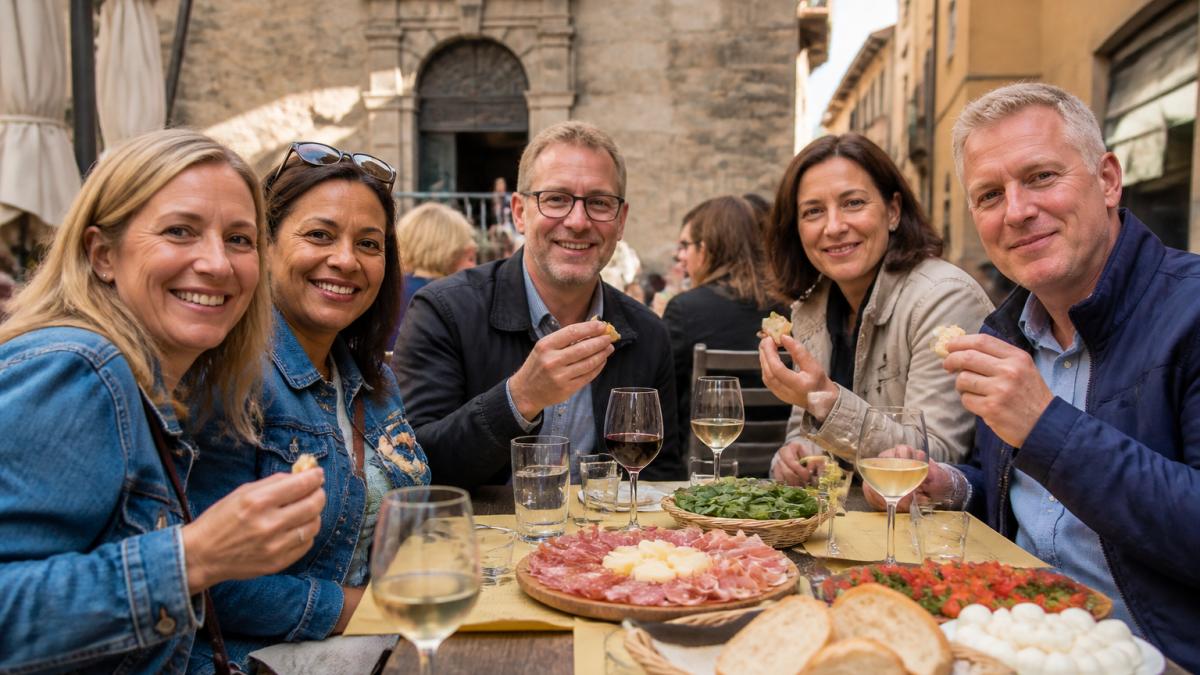
Regional food tours Italy: historian-led small-group journeys through Campania, Sicily, and the deep south, told through their food and wine.
Table of Contents
- What Makes a Regional Food Tour Authentic in Italy
- Regional Italian Food History and Its Living Traditions
- Best Practices for Choosing Food Tours in Italy
- Small Group vs Private Food Tours Italy: Which Suits Your Travel Style
- Where to Experience Authentic Regional Food Across Italy
- What Historians and Local Guides Bring to Regional Food Tours
- Conclusion
- Frequently Asked Questions
Last Updated: October 5, 2026
What Makes a Regional Food Tour Authentic in Italy
Authentic regional food tours in Italy connect you directly to the people, stories, and generational recipes that define how Italians actually eat. The difference between a genuine experience and a tourist trap comes down to who's leading the tour, where the meals happen, and whether the itinerary was built by someone who understands the region's food history.
Italian History with Joseph was founded by historian Joseph Walker, who has spent over thirty years living, researching, and guiding in Italy. Authenticity requires local tables, relationships with producers, and a guide who can explain why Sicily cooks with saffron, raisins, and wild fennel while Naples built its kitchen on dried pasta and tomatoes. When you join a regional food tour Italy experience led by a historian, you're tasting centuries of migration, conquest, and volcanic soil, from a glass of Lacryma Christi on the slopes of Vesuvius to a cannolo filled to order in Palermo.
How to Spot Genuine Experiences vs Tourist Traps
The easiest way to spot a tourist trap is group size and venues. Large groups funneled through predictable restaurants with laminated menus in five languages are watching a performance staged for outsiders, and the food usually tastes like it.
Real authenticity shows up in the details. Are you eating at a family-run trattoria where the pasta is still made in the back, or at a "traditional" restaurant run by a catering company? Does the guide know the cook's name and the story of the dish, or read from a script?
Venues matter too. Tourist traps cluster around major landmarks and charge premium prices for mediocre food. Authentic experiences happen where locals actually eat and where the food is actually made: a pizzeria in the old center of Naples, a working buffalo farm in Campania, a convent bakery in Palermo.
Regional Italian Food History and Its Living Traditions
Italian regional cuisine is dozens of traditions, each shaped by geography, history, and the people who settled there. Understanding this history transforms how you experience food on a regional food tours Italy itinerary. You stop seeing pasta as "Italian food" and start understanding why Naples and nearby Gragnano became the great makers of dried durum-wheat pasta, why Sicily's pasta con le sarde carries saffron, raisins, and wild fennel, and why Calabria still pours Cirò on a coast where Greek colonists settled more than 2,500 years ago.
Food tells the story of invasion, trade, and survival. In the south those layers are unusually easy to read: Campania with its volcanoes, Sicily with its Arab and Norman rulers, the mainland south with its centuries under foreign crowns. A tour led by a historian turns every meal into a window onto the past.
Campania's Volcanic Heritage and Coastal Cuisine
Campania's food is inseparable from Vesuvius. The volcanic soil around the Bay of Naples gives San Marzano tomatoes from the Sarno valley, the small piennolo tomatoes hung in clusters on the volcano's slopes, and Lacryma Christi, the wine of Vesuvius itself. A fresco found at Pompeii shows Bacchus beside a mountain covered in vines, generally identified as Vesuvius. The region's other great product, mozzarella di bufala, comes from the lowland plains of the Volturno and the Sele, where water buffalo have grazed for centuries.
Campania's coastal towns developed their own traditions. Baia, now partly under water, was the most fashionable seaside resort of the Roman world, and the nearby Lucrine Lake supplied Roman tables with farmed oysters. That coastal habit still shapes how Campanians cook: fresh fish, simple preparation, respect for the ingredient.
Naples itself is a food capital. Its street food grew from necessity and ingenuity: pizza folded to eat on the move, pizza fritta, the paper cone of fried seafood called a cuoppo, and sfogliatelle warm from the oven. In the city's trattorias, recipes pass from one generation to the next.
Southern Italy's Generational Recipes and Norman Influences
Southern Italy's food is tied to the Norman story. Tradition dates its beginning to 1016, when Norman pilgrims met a Lombard rebel, Melus of Bari, at the cave shrine of St Michael on Monte Gargano. Over the following century Norman adventurers took the mainland south and then Sicily. In 1130 Roger II was crowned king of a realm that lasted, under one dynasty or another, for seven centuries.
The Normans changed the south's rulers more than its recipes. They inherited and protected what was already there: Byzantine and Lombard traditions on the mainland, and in Sicily an Arab agriculture of citrus, sugar cane, rice, and eggplant. In 1154 the geographer al-Idrisi, writing at Roger II's court, described a town near Palermo that made dried pasta in quantity and shipped it to Calabria and beyond.
Later centuries added their own layers. The chili that fires Calabrian 'nduja came from the Americas after 1492, and Basilicata's great red, Aglianico del Vulture, grows on the slopes of an old volcano. These are regional traditions that took a thousand years to form. Many family recipes were never written down. They are taught at the stove, adjusted a little each generation, and rooted in the same ingredients.
Best Practices for Choosing Food Tours in Italy
Not all regional food tours Italy offerings are created equal. Quality depends on who's leading it, how the group is structured, and whether the itinerary matches your expectations and physical abilities.
Verify Expert Credentials and Local Knowledge
The guide's background matters more than any marketing claim. Look for guides who have spent years, ideally decades, in the regions they lead tours through, and whose credentials you can check. Joseph Walker studied history in Naples, has guided in Italy since the 1990s, wrote the book Buried Italy, and has consulted as a historian for productions on the History Channel, the BBC, and Discovery Channel.
Ask specific questions: Has the guide actually lived in these regions? Do they have relationships with the producers and restaurant owners you'll visit, or book through a central reservation system?
Local knowledge shows up in the details. A guide who knows the region takes you to a market on the day locals shop, introduces vendors by name, and knows which tables are booked months out because they're that good. No guidebook reader can replicate that.
Check Group Size, Accessibility, and Seasonal Timing
Small groups create space for real conversation with guides, cooks, and producers. Larger groups rush through venues and reduce the quality of every exchange. When choosing a regional food tour, ask for the maximum group size and confirm it in writing.
Accessibility matters. Ask detailed questions about walking distances, stairs, and physical demands, and be honest about your fitness level. Southern itineraries often include the uneven Roman paving of Pompeii, steps down into underground Naples, and the stone lanes of Matera. A good operator gives specifics, not vague assurances that "everyone can do it."
Seasonality affects what you'll eat and experience. Spring and fall offer the mildest weather and the widest range of seasonal ingredients, which is why our 2027 departures run from April to early June and again in September and October. Summer brings heat and crowds. Winter means some coastal restaurants close and travel is harder, but groups are smaller and prices lower.
Small Group vs Private Food Tours Italy: Which Suits Your Travel Style
The choice between a small-group and a private tour depends on your budget, comfort with strangers, and the experience you're seeking.
Small-group tours create built-in community. You'll spend days with the same people, share meals, and often develop real friendships, which is valuable for solo travelers or couples.
Private tours give you complete control over itinerary and pace: you set the schedule, choose which producers to visit, and decide how long to linger. This appeals to travelers with specific dietary needs, families with varying interests, or those who prefer privacy. We design custom private itineraries on request.
For most travelers, small-group regional food tours Italy experiences offer expert guidance, authentic access, and the company of like-minded travelers. Historian led small group Italy programs with guaranteed departure dates also let you book flights and plan months in advance.
Tour Type | Best For | Group Dynamics | Flexibility | Cost |
|---|---|---|---|---|
Small Group | Solo travelers, couples, first-time Italy visitors | Built-in community, shared meals, friendships | Scheduled itinerary, some flexibility | Moderate |
Private Tour | Families, groups of friends, specific dietary needs | Intimate, controlled | Complete flexibility, custom itinerary | Premium |
Where to Experience Authentic Regional Food Across Italy
Every Italian region guards its own table, from Piedmont to Puglia. The south is where our research and guiding run deepest, and where old food traditions are still part of daily life: Campania, Sicily, Calabria, and Basilicata.
Family-Run Trattorias, Markets, and Food Producers
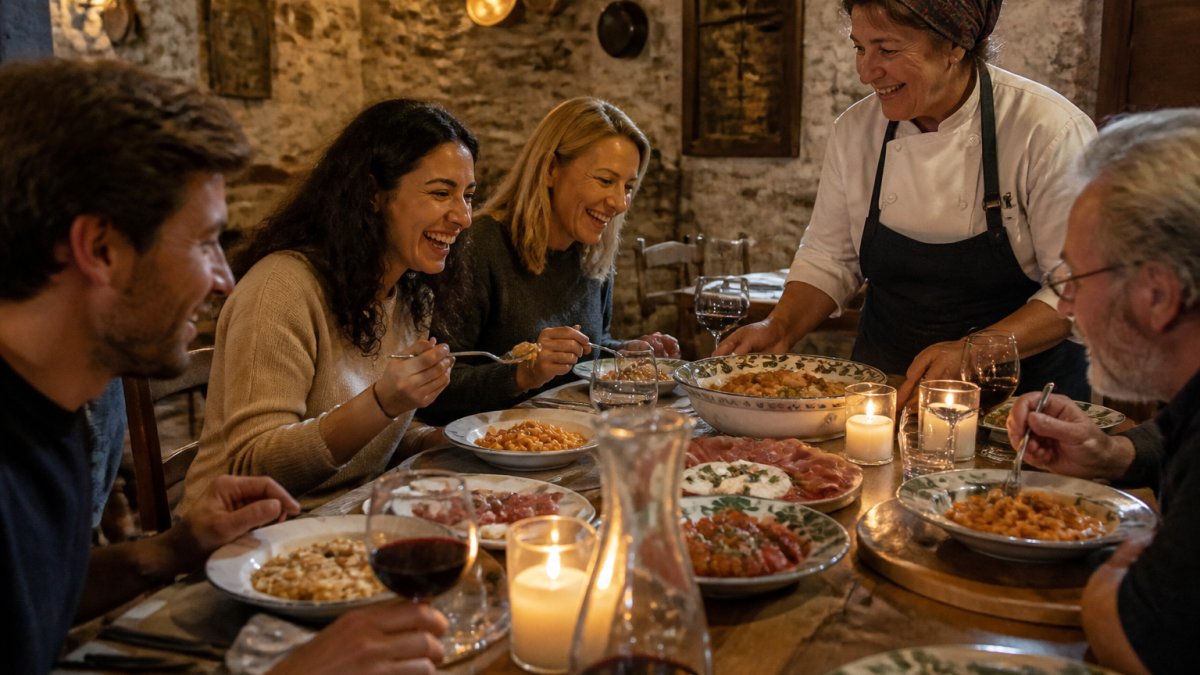
Family-run trattorias are where regional food traditions actually live. The best are places where the same family has cooked the same dishes for generations, adjusting for what the season offers but staying rooted in tradition.
Finding these places requires local knowledge. They're rarely in guidebooks, often lack websites, and sometimes lack signs. A guide who has spent years in the region knows which trattorias are worth visiting, when to go, and how to get a table when they're booked solid.
Markets reveal how locals actually eat. Time at the market where residents shop, such as the street markets of old Palermo, shows you what's in season, what's valued, and what's expensive.
Food producers open their doors to small groups. On The Forgotten Kingdom of Southern Italy we taste Amarelli licorice, made in Calabria by the same family since 1731, and sip Strega in Benevento, the town where it has been made since 1860. On The Lost Worlds of Sicily we eat cannoli filled to order at a convent bakery in Palermo and fish couscous on the island's western coast.
Hands-On Cooking Classes and Wine Tastings
Cooking classes taught by local cooks put a region's techniques in your hands. You learn why certain ingredients are non-negotiable and take home skills you can actually use. The best classes happen in a home kitchen or a small teaching space, not a commercial cooking school. Hands-on can also mean a producer's own workshop: on Campania Felix, travelers pull fresh mozzarella di bufala by hand on a working farm.
Wine tastings paired with food deepen your understanding of regional identity. Wine in Italy belongs to the meal, and each bottle carries local history. On our journeys travelers taste Lacryma Christi on the slopes of Vesuvius, Aglianico del Vulture from Basilicata, Cirò from Calabria, the volcanic reds of Etna, and Marsala, the fortified wine Nelson ordered for the British fleet in 1800.
A regional food tour Italy itinerary that includes both hands-on experiences and wine creates a complete sensory education. You learn to think like someone from that region and to understand the logic behind its flavor combinations and ingredient choices.
What Historians and Local Guides Bring to Regional Food Tours
The presence of a historian changes everything about a food tour. Food is shaped by geography, history, economics, and culture, and a guide who understands all of them can explain what you're eating and why it matters.
A historian can tell you that the tomato reached Italy from the Americas in the sixteenth century, that the first printed recipes for tomato sauce appeared in Naples in the 1690s, and that pasta with tomato sauce became everyday food only in the nineteenth century. Before that, Neapolitans were nicknamed mangiafoglia, "leaf-eaters," for the greens that filled their pots.
A historian knows the stories behind the places you're visiting: the abbey at Venosa where the Hauteville brothers who led the Norman conquest are buried, or the Palatine Chapel in Palermo, where a Norman king set Arab carpenters and Byzantine mosaicists to work under one roof. The same mixture is still on the plate in western Sicily.
Local guides bring relationships and access. They know cooks and producers personally, arrange meals travelers typically can't book, understand seasonal rhythms, and handle the logistics of getting a small group to the right place at the right time.
Conclusion
Choosing a regional food tour in Italy means choosing between a surface-level experience and real immersion in centuries-old culinary traditions. The difference comes down to who's leading the tour and whether they've built real relationships with the people and places you'll visit. At Italian History with Joseph, our historian-led small-group tours combine historical knowledge with local tables, producers, and hands-on tastings that are hard to arrange on your own. Joseph Walker has spent over thirty years in Italy, and every itinerary is designed to connect you to the stories, flavors, and people that define how Italians actually eat. Inquire now to explore our guaranteed-departure regional food tours and discover the Italy that exists beyond the guidebooks.
Frequently Asked Questions
What defines an authentic regional food tour in Italy?
An authentic regional food tour connects you directly with local food traditions, family-run producers, and skilled chefs who prepare dishes using generational recipes and regional ingredients. It moves beyond restaurant sampling to include markets, farmhouse dining, and hands-on experiences like cooking classes. The guide—ideally someone with deep local or scholarly knowledge—explains how history, geography, and culture shaped the cuisine you're tasting, not just what's on your plate.
Is it better to book a small-group food tour or a private experience in Italy?
Small-group tours offer camaraderie, shared learning, and often lower costs, while private experiences allow complete customization and flexibility. Small groups work well if you value meeting other travelers and benefit from group dynamics; private tours suit those with specific dietary needs, accessibility requirements, or a strong preference for a tailored itinerary. Consider your travel style, budget, and whether you want the social aspect of group travel or the intimacy of a private guide.
How does regional history influence the food I'll eat on an authentic tour?
Italy's food is inseparable from its past. Campania's volcanic soils produce distinct ingredients; southern Italy's Norman, Greek, and Arab conquests left culinary marks still visible in recipes and spice use. Coastal regions developed different traditions than mountain areas. A tour led by someone with historical expertise—not just culinary knowledge—reveals why you're eating what you're eating, connecting each dish to the people, trade routes, and events that shaped it over centuries.